Showing posts with label Urban Photography. Show all posts

Saturday, January 29, 2011

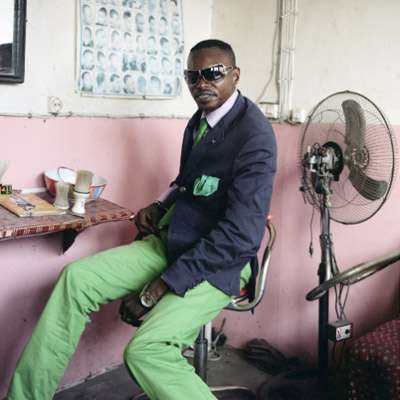
Congo Street Style by Francesco Giusti


Francesco Giusti is a freelance documentary photographer oriented toward investigating issues of social realities, communities and identity. His research about the long-standing inmates of a psychiatric hospital in Naples received the honorable mention of Leica Oskar Barnack Award in 1999 and was a finalist of Prix Care du Reportage Humanitair in 2000. In 2002, he was awarded the Canon Award for Young Photographers for Best Photographic Project with an intimate portrait story about a community of transvestites in Genoa, Italy.


During the last years, Giusti has documented immigration and asylum seekers issues especially in Italy and in the Mediterranean Sea. In 2006, he published the book Hotel Industria and the volume Ex Fabrica - Identities and mutations on the border of the metropolis, which received an honorable mention Ponchielli Award 2003. He has documented slums in Nairobi, Cairo and Port Au Prince. He has recently worked in Haiti, in the Sub-Sahara area of Western Africa and in Congo Brazzaville. His works has been published in Italy and abroad and exhibited in galleries and international photographic events.


Wednesday, December 22, 2010

Urban Zoom Photography by Jakob Wagner


Duesseldorf, Germany-based photographer Jakob Wagner sure knows how to make a city look like a living, breathing being. Using long exposure and Photoshop, he's created a spectacular series called Urban Zoom. Shot in various cities around the world including Amsterdam and New York, these photos will either transport you to another time and place or make you feel as though you're stuck in an Inception-like dream.


Saturday, December 18, 2010

Urban Photography by Ben Canales


Creative light urban photography by Ben Canales, talented photographer from Portland, OR.


Saturday, December 11, 2010

Not the Invisible by Tommaso Nervegna


Tommaso Nervegna is a multidisciplinary Designer, Art Director and Photographer. Digital Comunication expert and analyst in the 6 years of commercial experience he has developed a unique creative workflow, that he now shares as a project management consultant, making him a productivity guru.


He has been working for a wide ranging client list including Eni, Magneti Marelli, Banca Intesa San Paolo, Banca Etruria, OvO, Vodafone, Danone, Disney, Adobe, Google and Mercedes AMG.

His work has been featured many times in fashion and design magazines such as like Harpers Bazar, Computer Arts and Advanced Photoshop Magazine.

He is currently working at a project management workbench and writing a new productivity and creative organization methodology. He currently lives in Milan - Italy.


Thursday, November 11, 2010

Beautiful Stevenage by Michael Rolph


Michael Rolph’s new exhibition Beautiful Stevenage at Campus West is an ironic twist on the photographer’s home-town and a salute to American Photographer Stephen Shore’s seminal photographic series American Surfaces.
Shore, whose work raised the status of everyday American icons and street furniture to high art, describes his work as ‘thinking without words’ and his photographic modus operandi as the attempt to convey the ‘emotional weight in any situation through images’.


Looking at the ‘non-spaces’ and ‘un-places’, the forgotten corners and uncared for parts of Stevenage, which Rolph has deftly captured with his own camera, it’s clear that Shore’s ideas have made a lasting impression and had a profound influence on the development of this emerging photographer’s remarkable visual vocabulary.

Celebrating the banal or the ‘ordinary’ and forensically monitoring the deterioration of Stevenage’s originally utopian urban fabric, Rolph brings any number of impressions from the recent history of post war photography to his work: there is an impressive sculptural beauty in his evocation of abandoned shopping carts, or the way that non-descript 1960s apartment blocks rise majestically above the city’s tree-line bringing to mind comparisons with the typologies found in the work of German photographers Bernd and Hilla Becher. As senior staff of the influential Düsseldorf photography school, The Bechers built an international reputation with their obsessively repetitive photographic renderings of industrial motifs like grain silos or water towers.
There is also an almost ‘apocalyptic’ emptiness in Rolph’s images inviting interesting comparisons with the work of another German photographer Candida Höfer, whose museum or corporate interiors – which, like many of Rolph’s, are always devoid of people - contain the implicit promise of human presence, either just out of sight or just out of reach.
Finally, and most ironically perhaps, Rolph has explained how he ‘dresses down’ when on location in Stevenage, trying to ‘blend in’ with his surroundings in an attempt to ward off unwanted attention, taking on an anonymous photographic persona which recalls the role play implicit in Cindy Sherman’s Untitled Film Stills.

These pictures have a greater breadth of emotional weight than words can convey, evoking Rolph’s confusion and ambivalence about the city of his birth. Ultimately perhaps Rolph seeks and finds beauty, and emotional peace, where we might least expect it - in the banality of non-descript spaces that 21st century living offers up.