Showing posts with label Helena Bonham Carter. Show all posts

Tuesday, November 30, 2010

THE KING'S SPEECH

Written by David Seidler
Directed by Tom Hooper
Starring Colin Firth, Geoffrey Rush and Helena Bonham Carter

King George VI: Waiting for me to commence a conversation, one can wait a rather long wait.

When a king speaks, he must command attention. Though the British monarchy may be more iconography than anything else at this point in history, people will still look to their royal leader for guidance and reassurance in times of woe and doubt. That’s a lot of pressure for someone who may never have wanted to assume the responsibility to begin with. Unfortunately for King George VI, his birthright meant he did not have any choice in the matter. It’s not that he didn’t think he could do it; it’s just that he wasn’t confidant enough to think anyone would care to have him.


Forget the king; when director Tom Hooper speaks, he has my full attention. After his impressive first feature last year, THE DAMNED UNITED, Hooper continues his journey in regal fashion with THE KING’S SPEECH and delivers the goods right from the start. Colin Firth, who could easily garner another Oscar nod with his heartbreaking work here, is the Duke of York. It is 1925 and he is about to address the nation. The tension builds and by the time he gets to the podium, every ear in the land appears to be waiting to hear what he has to say. At first, there is nothing. What follows that awkwardness is a disjointed, passionless address that he stammers all the way through. It may not be as epic a global failure as modern day technology allows but enough people were listening to make it seem like a public collapse that he might never recover from.


He almost didn’t. King George VI went through many speech therapists before landing on Lionel Logue (Geoffrey Rush). Logue helps George break down the years of subtle abuse one suffers as the son of a king to see that his speech impediment is the result of isolation and lack of confidence, not something particularly physical. Their banter is at times hilarious and at others quite intense. Their immense combined talent, along with supporting turns from Helena Bonham Carter and Guy Pearce, give THE KING’S SPEECH even more depth and flourish than Hooper already has. Together, they created a film that will certainly resonate long after it’s said what it has to say.


Thursday, June 10, 2010

ABC: F is for FIGHT CLUB


FIGHT CLUB

Written by Jim Uhls
Directed by David Fincher
Starring Edward Norton, Brad Pitt and Helena Bonham Carter

Editor's Note: They say the first rule of Fight Club is not to talk about Fight Club.  I'm actually pretty certain that this is also the second rule of Fight Club.  I am breaking both of these rules in this piece but, to be fair, I'm not a card-carrying member of Fight Club so I don't think I have to abide by the group's rules.  Anyhow, you have been warned ...


When David Fincher’s FIGHT CLUB was released in 1999, it was one of those movies that not only made you stop and take notice but had you wondering what the fuck had just happened.  Even though the century was about to turn, people didn't know what to make of it at first.  How could they really?  Here you have this violent, aggressive piece of filmmaking that is hellbent on literally blowing up most of the institutions that modern society has grown entirely complacent to.  More importantly, all of this unrest stems not from a growing revolt amongst the masses but rather the increasingly debilitating delusions of just one man’s mind.


“This is your life and it is ending one minute at a time.” 

The man in question is never even named.  He is simply the Narrator and he is played by the seamlessly talented Edward Norton.  Norton is the perfect choice for our hero.  His earnest face and effortless charm make him very easy to like and to relate to.  Our Narrator, who is not coincidentally reminiscent of Malcolm McDowell’s narrator in A CLOCKWORK ORANGE, starts out just like us.  He has put in countless hours at a thankless job to afford his ideally located condo and to amass the multitude of perfectly suited furniture pieces to fill that space.  He has done everything according to the great design but yet he is in a constant state of unrest.  He can’t even sleep unless he has the chance to shed all of his pain in the arms of people facing their own mortality at nightly support groups for a variety of cancer patients.  He is an exacerbated version of who a great majority of us actually are.  And thanks to Norton’s uncanny ability to draw in his audience, our dormant anger grows with his.


“This chick, Marla Singer, did not have testicular cancer.”

Of course, the Narrator does not have testicular cancer himself but the fact that he actually has testicles at least suggests that he could.  Marla (Helena Bonham Carter) is something of a monster.  She too does not step in time with the rest of the world – chain smoke getting caught in her wildly untamed hair as she walks in and out of laundromats stealing people’s clothing before walking directly into traffic without skipping a beat.  Marla is what sends the Narrator over the edge.  Her presence disturbs him but he cannot figure out how.  He just knows that he can’t sleep again now that Marla has made herself known.  It might have something to do with his addiction to cancer support groups.  He appreciates the sincerity of humanity when death is looming and Marla essentially wants to die.  Her death is close, or so she would like it to be, but, unlike her cancer patient friends, her death is one of her own choosing.  Where is the sincerity in that?  To be fair, I would probably lose a wink or two over that conundrum too.


“I know this because Tyler knows this.”

The pressure of life’s trappings starts to hit our Narrator a little too hard at this point and what was waiting patiently to emerge this entire time finally does.  Fincher has been giving us subtle hints; they’re blink-and-you’ll-miss-them moments but Tyler Durden, played by Brad Pitt in his prime, has appeared in frame a few times before this for split seconds at a time.  We don’t know it then, unless we’re super geniuses or have read the Chuck Palahniuk novel, but Tyler is a complete fabrication of the Narrator’s mind.  The impact of the story rests on the audience not knowing this bit of information until later because they need to believe the bloody reality of these two men beating each other rotten in the parking lot of some dive bar.  They need to believe this because it needs to inspire legions of other men to do the exact same thing.  These men and their nightly brawls are FIGHT CLUB.


“I want you to hit me as hard as you can.”

I am not a fighter but I, like the Narrator, beat the living crap out of myself from time to time.  The difference, or at least the one I am choosing to focus on right now, between the Narrator and myself is that I beat myself up under my breath when I don’t think anyone is looking.  He beats himself senseless and he does it right there for everyone to see.  And while he may be beating himself up, he is still fighting back for the first time in his seemingly insignificant single-serving life.  Aside from sincerity, there is something else the Narrator took from his life moonlighting on the support group circuit.  The imminent promise of death is a pretty good reminder for most that they’re still alive.  Pain, the intense kind that leaves scars and ringing in your ears while it drips your blood to the floor, has a similar effect.  This is especially true for those of us who don’t even realize we still haven’t slept in years.


Tuesday, December 25, 2007

SWEENEY TODD: THE DEMON BARBER OF FLEET STREET

Written by John Logan
Words and Music by Stephen Sondheim
Directed by Tim Burton


Sweenney Todd: I can guarantee the closest shave you’ll ever know.

When the ensemble harmonizes the unsettling baritone with the glass-shattering soprano parts of “The Ballad of Sweeney Todd” at the opening of the stage production, SWEENEY TODD: THE DEMON BARBER OF FLEET STREET, the tone is not only announced but adamantly affirmed. You are in store for a truly bizarre tale that is the epitome of madness and you are being introduced to man burnt by an unjust system, robbed of everything and everyone that ever meant anything to him, who has now returned for his due vengeance and has brought with him a very unhealthy bloodlust. It would seem that there could be no one better suited to translate this haunting story to film than master of the dark and champion of the disenfranchised, director, Tim Burton. Burton begins by hastily deciding to skip the ballad and go straight to what he knows best. Bright red blood drips down walls and slips between the gears of a giant meat grinder, Stephen Sondheim’s potently explosive score driving everything forward. But just as the ballad foretells on stage of unbelievable vocal histrionics to come and amaze, Burton’s decision to remove it in favour of score and visual gore confirms that he will be relying on what he knows in fear of the daunting music he has failed to grasp.


For a director who has built his entire reputation on his creative visual style, it is genuinely surprising to watch SWEENEY TODD unfold in such an unimaginative fashion. It does not seem so at first. In fact, it is quite a twisted treat to dive in to the cobblestone streets of yesterday’s London, tainted blue and gray by cinematographer, Dariusz Wolski, to a saturation point that makes the patrons appear as though they are just waiting, if not begging, for their dull lives to end. Who can blame them really? The light of day rarely seems to rise on London as it is constantly shrouded in heavy cloud. And while the camera hints at the scope of London by weaving from the picturesque rooftops to a dizzying maze of streets, it quickly ceases to a halt on one particular street corner, home to Todd’s barbershop. Despite having so much room to move, Burton traps us here and allows the claustrophobia to set in. This is a fine way to make people uncomfortable but it also makes for some rather limited musical staging. Burton rushes through the musical numbers by slicing lines out (unfortunately some of the more hilarious ones) so that he can get to the action because he knows that their stunted staging slows the pace. Subsequently, he leaves us with nothing more than a bloody mess on the floor.


Further proving the unimportance of technical mastery in this musical is Burton’s decision (with the perplexing blessing of Sondheim himself) to cast untrained singers in the demanding leads. The character of Sweeney Todd requires a voice so powerful and fierce that it resonates fear through the bodies of all who hear it. Johnny Depp surprises with how well he can handle the material but his capable performance never ignites the passion of a mad man. Meanwhile, Todd’s counterpart in scheming evil, Mrs. Lovett, a woman so conniving and desperate that she will say or do anything to make sure her man is content and by her side, is played by Helena Bonham Carter, a woman whose voice is so weak that she is barely capable of communicating any of the colour in the character. Each actor carries the same drab expression on their face throughout the film as though they are bored or just completely unsure of themselves. They each have their moments but neither successfully demonstrates the depths of their treachery or the heights of their dark wit. As they watch each step, careful to avoid each other’s toes, Burton guides their performances into characters with soulless shells that barely frighten each other, let alone the audience.


In what will hopefully be his last musical outing, Burton breaks a golden musical rule. The musical numbers should never be rushed. That’s why we’re there – to appreciate the beauty of Sondheim’s layered and dense masterpiece. Only that isn’t why Burton is there. Clearly, Todd’s penchant for slashing throats is what most fascinated the man at the helm of this horror story. And while the blood gushing out and splattering against the camera and the walls is both disgusting and exhilarating at the same time, it amounts to very little more than gorgeous torture porn. Who knew that SWEENEY TODD would be so maniacal that even the insane genius of Tim Burton could not fully comprehend the man himself?

Monday, October 24, 2005

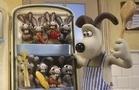
WALLACE & GROMIT IN THE CURSE OF THE WERE-RABBIT


Written by Bob Baker, Steve Box and Mark Burton
Directed by Steve Box and Nick Park

The small farming town where this fair story takes place is home to good, peaceful folk who spend the majority of their time and energy attending to their prize-winning vegetable gardens in preparation for the annual vegetable harvest festival. They are simple people with simple values like hard work, community and being humane to all creatures. Perhaps the same can be said for “The Curse of the Were-Rabbit” creators Steve Box and Nick Park. Years of dedication and attention were required to assemble this first feature for the Academy-Award-winning characters of Wallace and Gromit and this film highlights similar themes to Park’s previous claymation feature, “Chicken Run”, like being kind to all the animals. However, choosing all the right vegetables does not a great stew make.

Wallace (voiced by Peter Sallis) is a goofy, awkward, good-natured fellow who owns and operates his own security company to protect the villagers’ prize vegetables along with the help of his reliable and crafty dog, Gromit. They are always successful, always humane and always admired until the appearance of the Were-Rabbit (a giant freak cross between a rabbit and a werewolf). It is their mission to save the vegetables so that the festival can go on as planned. Without this festival, these people will have nothing … There’s a lot hanging on Wallace and Gromit’s heads. Lady Tottington (voiced by Helena Bonham Carter) is Wallace’s potential love interest and her persistent suitor, Victor Quartermaine (voiced by Ralph Fiennes) acts as the counterpoint to Wallace’s humane approach to pest control by insisting that violence is the only way to effectively attack their problem.

It’s a solid story with solid characters and some solid laughs but “The Curse of the Were-Rabbit” is about as exciting as well, a vegetable festival in a small town. I first wondered if perhaps I had not tried to see the film through the intended audience’s eyes. After all, it’s colorful, the characters are enjoyable (in fact, Gromit is downright endearing) and there are sporadic moments of excitement and laughter. Then I noticed that none of the children in the audience seemed to be having very much fun either. Without trying to sound extremely clichĂ©, the film lacked heart and today’s kids (this larger one included) didn’t bring theirs from home to make up for what was lacking ... But damn those rabbits were cute.

Monday, October 10, 2005

TIM BURTON'S A CORPSE BRIDE


Written by John August, Pamela Pettler and Caroline Thompson
Directed by Tim Burton and Mike Johnson

A tiny, blue butterfly flutters about after being set free from the clasp of two frail, pale hands. It flies aimlessly up the streets and down the alleys of the fictitious British city of yore that is the setting of “Tim Burton’s ‘A Corpse Bride’”. It is a tiny burst of colour in an otherwise dark and gloomy (read: typical for Burton) city and consequently dark and gloomy life of Victor, who has just set this creature free after having immortalized it with paint and paper. Victor, voiced effetely by Johnny Depp, is to be married to a woman he’s never met the very next day in order to increase the stature of his family; A fate equivalent to keeping the beautiful butterfly under glass until it’s inevitable death.

These nuptials must go according to plan as much is at stake for both families involved. What fun would all this be if that’s what actually happened? While trying to get a grip on his pre-wedding anxiety in the forest just outside of town, Victor meets Emily, The Corpse Bride. Emily’s story is the stuff fairy tales are made of. Once in a love with a rich, handsome type that her parents did not approve of, she made the decision to elope. Only her fiancĂ© had other plans. To be more specific, he killed her and ran off with her dowry. Not one to be deterred from her quest for true love, Emily decided to stick around the forest until a gentleman came along who would love her the way she deserved and for the rest of her afterlife.

Who hasn’t been there before, more or less? Jilted by love one too many times, we wait for the perfect someone to come along and find us sitting there, sweeping us away with promises of forever. Like Emily, we might end up waiting a while. Are we as good as dead if we just sit and wait for love to find us? I know we’re tired and broken but we’re certainly not proactive if that’s our approach.

Being dead isn’t so bad in this town though. In fact, the underworld is a hell of a lot more swinging than the one up on the ground. Skeletal folk living it up, singing of love, in vivid, wild colour while the living focus on their bank balances and inappropriate behaviour at the dinner table. This contrast could have ended up being terribly blatant but Burton and Johnson aren’t satisfied with leaving it so black and white. Victor and his intended bride-to-be are actually in love. Thus there is something worth fighting for, something worth living for, something ripe with possibility that grows amidst the drab, dark despair of this supposed life.

To both push this story forward and kill some time, Burton and Johnson rely heavily on misplaced musical numbers, the opening song is promising but so much time goes by without another song popping up that you forget you’re even watching a musical. And despite my reluctance to make obvious comparisons, I can’t help but miss the jubilant and disturbing soundtrack to Burton’s previous, more cohesive stop-motion film, “The Nightmare Before Christmas”. Thankfully, the characters are both animated and voiced so symbiotically that the visual feast is more than enough to keep your stomach from growling with discontent. In fact, it was mostly during scenes where no one was singing that I was hungry for more.

Hope always manages to make its presence known in the demented world of Burton films and, in the case of “The Corpse Bride”, it carries you through to the end believing in love and the sacrifices one must make to let that love grow. One character asks, “Can a heart still break once it’s stopped beating?” The answer is found in the awesomely lively eyes of the already decaying Corpse Bride herself, a woman subjected to understand that if you try to keep life locked under glass, be that yours or someone else’s, death is the only inevitability.