Showing posts with label Mark Wahlberg. Show all posts

Friday, December 10, 2010

THE FIGHTER

Before a boxer sets foot in any ring, he most likely has a plan of attack in place. If he is serious about what he does, he has studied his opponent; he knows his strategies, his weaknesses. A great boxer is in control of the game even when it seems like he might not be; he can see the match straight through to the knockout. THE FIGHTER is just like that boxer and once the bell rings, signifying the fight has begun, it comes at you fast and hits you hard. You won’t even see it coming. It’s that good.

Everyone is a fighter in THE FIGHTER but there are two that fit the bill in a more technical sense of the word. Mark Wahlberg, a producer on the film, plays Micky Ward, the real life Lowell, Massachusets native and now retired junior welterweight boxing champion. Ward was on hiatus from professional boxing in the early ‘90’s and the film picks up as he is preparing for his comeback in 1993, with his brother, Dickie Ecklund (Christian Bale), also a former boxer, coaching in his corner. Ecklund’s serious crack problem does not allow for him to be in anyone’s corner but his own really and Micky must learn to fight his way out from brother Dickie’s shadow in order to become his own man.

Wahlberg gives a strong performance, giving THE FIGHTER a solid center to move around but part of Micky’s character is to allow the more dominant forces in his life control his surroundings. This allows for the supporting players to truly stand out. Bale is a twisted and tortured mess, a refreshing return to form. Meanwhile, Melissa Leo is pure, trash gold as Micky & Dickie’s manager mom. Even Amy Adams turns a quiet role as Micky’s love interest into something smoldering. Her fights with Mama Leo are almost as gruesome as the one’s in the ring.

As incredible as THE FIGHTER is, it would be nothing without the man in its corner, director, David O. Russell. Russell has crafted a taut picture that plays like its working the ring from every angle possible and placing the viewer in the middle of this barrage of punches that rarely lets up. Don’t worry; you get out alive. You aren’t the same though.

Saturday, April 10, 2010

DATE NIGHT

Written by Josh Clausner
Directed by Shawn Levy
Starring Steve Carrell, Tina Fey and Mark Wahlberg


Claire Foster: No! When he says,” vagina”, he means your face.

Before the day has even started, it is already gone. Nasal strips are ripped off your face while miniature bodies pile drive into you before the alarm even has a chance to go off. In all honesty, the alarm probably hasn’t even needed setting in years. Something will inevitably wake the Foster’s up to their routine earlier than necessary. Phil and Claire, played by the king and queen of NBC comedy, Steve Carrell and Tina Fey, sit on opposite sides of their bed and stare into the separate abysses that await them. The message is clear; being married is hard, maybe even too hard. As you look at these two comedic geniuses though, you still see hope in their nearly defeated faces – hope for both the Foster’s themselves and for the movie you’re actually about to watch. What everybody needs is a good DATE NIGHT.


I am not married and nor do I have children. In fact, I saw DATE NIGHT in the middle of the afternoon, alone. I may not be the intended audience in regard to the marital doldrums theme we have seen plenty of times before but there is a whole other audience built in to DATE NIGHT that director, Shawn Levy, plays to more often than the first. That would be the legions of Carrell and Fey followers out there, of which I easily include myself among. Before this, I essentially avoided Levy’s work altogether. I’m not saying I’m about to go back and watch the NIGHT AT THE MUSEUM series but I must commend him for rising above the complete implausibility of the film’s mistaken identity premise by allowing his stars to shine when they should. Meanwhile, getting strong character actors, like James Franco, Mark Wahlberg and Mila Kunis, for random bit parts also gives more credibility whenever it was needed.


Fey’s quick wit and Carrell’s endearing awkwardness may be strengths we are used to by now and just expect to some extent, but their mastery is only getting better and it is their chemistry that makes DATE NIGHT work when it so easily could have bombed. These two immensely funny people pull from their dramatic strengths to make sure the Foster’s are a real couple. They’re real because you can always see the fear on their faces – the fear that they could actually lose each other. This DATE NIGHT really needs to work. And it does.


Tuesday, January 19, 2010

THE LOVELY BONES

THE LOVELY BONES
Written by Fran Walsh, Phillipa Boyens and Peter Jackson
Directed by Peter Jackson
Starring Mark Wahlberg, Rachel Weisz, Saoirse Ronan and Stanley Tucci


I would not have thought that Peter Jackson, the director of the infamous Lord of the Rings trilogy (in case you didn’t know), would ever be a horrible choice to adapt a cherished novel to the big screen. Going forward, I will not be so naïve. In it’s original form, The Lovely Bones, as delicately told by author, Alice Sebold, is a shockingly honest account of what one seemingly happy family endures after the death of their eldest daughter. Its scope reaches into the minds of everyone who is affected by her death and even goes so far as heaven itself for answers. On screen, it goes nowhere near any of this insight and just ends up a mangled mess.


The death of Suzie Salmon (Saoirse Ronan), a fourteen-year-old girl with her whole life ahead of her, was senseless violence in a time when people still thought such things never happened to them. No body is found and therefore no rest is had by those Suzie touched in life. To sit with the book is to sit with the Salmon family in their grief. It is a cathartic experience and one that I may need to go through again after having all my healing robbed from me by Jackson. His focus, if he had any at all, circles around Suzie’s personal transition from the land of the living to that of the dead. This allows Jackson to imagine grand imagery to bridge the gap between both worlds but, like Suzie, he too gets lost in the “in-between”.


The only things that keep The Lovely Bones from falling apart completely are the performances of Stanley Tucci and Ronan as the murderer and his prey. Their incredible grasp of the source material is the only reminder of its chilling emotional charge. As for Jackson, he should have stuck with the gold he had in hand from the start.

Sunday, June 15, 2008

THE HAPPENING

Written and Directed by M. Night Shyamalan
Starring Mark Wahlberg, Zooey Deschanel and John Leguizamo


Elliot Moore: Plastic. I’m talking to a plastic plant. I’m still doing it.

Something the supposed contemporary auteur, M. Night Shyamalan, has never been quite good at is getting directly to the point. He usually likes to keep us guessing the whole way through and by the time the expected twist tries to catch us off guard, we are either completely floored or entirely annoyed. In his latest offering, THE HAPPENING, he finally learns how to get straight to the punch but that, as it turns out, is just as problematic as keeping us in suspense. Shyamalan seems as if he has been somewhat humbled by his recent difficulties finding an audience but from the moment his name appears ominously in the credits as the man who does everything (writing, producing and directing), his presence looms over the premise with an air of obnoxious knowing.


THE HAPPENING first hits Central Park and we are given no time to breathe before the scenario turns apocalyptic. People stop in their tracks, repeat random phrases and find interesting or perhaps just easily accessible manners in which to kill themselves. No one knows what’s happening, except for Shyamalan, who appears to be reveling in the delirium from the rustling trees above. The affliction spreads and the mystery is at first certainly engrossing. Whatever intensity the scenario creates though is unnervingly undone by the cast’s delightfully laughable attempt at keeping it classical. Mark Wahlberg as enthusiastic hopeful, Elliot Moore, leads his wife and best friend (Zooey Deschanel and John Leguizamo) toward safety, despite having no idea where that is. His naïve optimism is cute when it should be compelling but he can hardly be blamed for what is clearly Shyamalan’s overall approach.


The classical style and contemporary reality ultimately clash and it becomes clear that Shyamalan’s biggest obstacle is Shyamalan himself. His bigger ideas are solid but muddled by the little ideas he throws in to keep things interesting. Naturally, the tragic events are initially assessed to be terrorist attacks. Shyamalan paints America as a panic stricken populace that know who to blame when they cannot explain what is happening. They don’t even question the possibility of it being a more organic threat until too much damage has been done. This is in itself heavy enough to sustain intrigue while making smooth criticism of the American government as shepherd and its people as sheep, but when you meet the people he is criticizing, they are so futile, prattling on when they should be in crisis mode, you wish they would just breathe in the bloody toxins already and die. The promise of a more satisfying film always seems just out of reach and a little help behind the scenes, primarily in the writing department, would help Shyamalan find the focus he so desperately needs.


THE HAPPENING is passably suspenseful, occasionally intriguing but mostly ineffective. It feels contrived, as though Shyamalan were trying too hard to win back our graces, doing so in such a false fashion. Perched comfortably at his pulpit, he preaches about protecting the environment but without ever communicating any actual passion for it. Consequently, the pet cause feels more functional than it does pertinent. And all the while, you can feel him looking down at you, disappointed that we don’t get his genius when what he really should be doing is looking inward to see that perhaps he is just not communicating as clearly as he could. Then he might be able to see that we want to love him; he’s just making it too hard to do so.

Saturday, October 14, 2006

THE DEPARTED


Written by William Monahan
Directed by Martin Scorcese

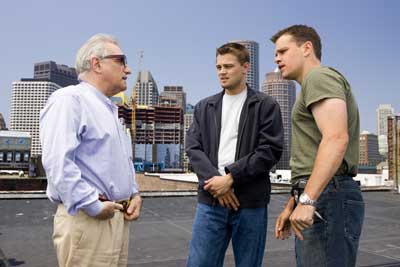
This is it, folks. It’s the one you’ve all been waiting for. It is a true return to form, style and relevance. It has been all too easy, almost expected, to laud Martin Scorcese pictures with praise in recent years. The man has talent and has crafted some of cinema’s landmark films, from TAXI DRIVER to GOODFELLAS. The industry was naming his last picture, THE AVIATOR, the film of the year. That seemed exaggerated, an all too safe a thing to say. To name the same of his previous epic mess, GANGS OF NEW YORK, was even more absurd. There seemed to be regret for not crowning him king earlier for more deserving efforts. The later pity praise felt apologetic instead of congratulatory. The films themselves felt manufactured for mass appeal, devoid of personal involvement and often a courting of industry acceptance. This time is different. This time Scorcese feels concise and calculated, like a man with a purpose, focus. This time Scorcese has left his hopes for accolades behind him and engineered his own cinematic rebirth. This time Scorcese says goodbye to his past and embraces THE DEPARTED.

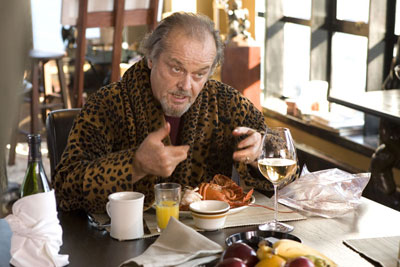
Borrowing its intricately woven story from the 2002 Japanese film, INFERNAL AFFAIRS, THE DEPARTED stars Leonardo Dicaprio and Matt Damon as moles infiltrating both sides of a war between the law and organized crime. Dicaprio plays Billy Costigan, a Boston State Policeman with a family history entrenched in crime. As he is trying to make a new name for his family, he is thrown back into the world he worked so hard to escape. Costigan will go undercover and make his way into the confidence of Boston’s biggest crime boss, Frank Costello (Jack Nicholson). Costello, meanwhile, has his own man on the inside of the Boston State Police, Colin Sullivan (Damon). Sullivan was brought under Costello’s wing when he was just a boy who was doing well in school. Both Costigan and Sullivan sought power. Costigan’s power lied in authority and changing his apparent destiny through hard work. Sullivan was seduced by a different kind of power. He still had to work hard but he had the muscle to back him up when he needed it. Dicaprio’s and Damon’s solid performances heighten the tension and make for insightful character studies. As Costigan, Dicaprio is anxious and unstable. Pretending to be a brute with nothing to live for and no reason to do bad other than it being his genetic makeup goes against everything he’s ever struggled with. His eyes flare up and his whole body flinches every time he is around intense violence; he never seems to get used to it. As Sullivan, Damon is a confident, cocky liar who gets off on how many people he’s fooling and just how well he is fooling them, from his colleagues on the force (a supporting cast consisting of Martin Sheen, Mark Wahlberg and Alec Baldwin) to his psychiatrist girlfriend, Madolyn (the relatively unknown and engaging Vera Farmiga). When it becomes apparent that both teams have been permeated, the game to catch the rat becomes tenser the closer each gets to figuring the other out. Amidst growing suspicion and fear of getting caught, THE DEPARTED becomes unpredictable and entrancing.


The surprisingly layered performance of Nicholson as Costello is one of THE DEPARTED’s best features. I expected that Nicholson could pull off a mob boss in his sleep but he brings experience and the effects of time to the role. Like one would expect, one doesn’t become a mob boss from being a nice guy. Costello is evil right through. He finds amusement in how a body slumps over to the side instead of forward when he blows a bullet through the back of her head. He has grown accustomed to getting everything he wants, to having no one stand in his way. To some extent though, he has grown bored and complacent with this lifestyle. He knows of nothing else but knows that alternatives exist. He seems to live his life appreciative of his position but with regret, or at least an awareness, that he did not make other decisions. When he speaks of Costigan’s father as a guy who could have been a big boss if he wanted to but didn’t, the acknowledgment alone highlights the power of choice. When he tells Costigan that he should go back to school, it highlights his own choices.

Something Costello is fond of saying is that “No one gives it to you; you have to take it.” It is a mantra for Costello and it seems like one for Scorcese as well regarding his approach to this film. Scorcese’s command of THE DEPARTED can be felt in the composition of each shot, in the energy of the omnipresent soundtrack and the grasp of the subject matter. Like Costello, Scorcese has been coasting in recent years; the results have been passable, at times solid, but always tired. THE DEPARTED announces Scorcese’s return to making affirmative choices again, and the right one’s at that.