Showing posts with label Jake Gyllenhaal. Show all posts

Friday, November 26, 2010

LOVE AND OTHER DRUGS

Written by Charles Randolph, Edward Zwick and Marshall Herskovitz
Directed by Edward Zwick
Starring Jake Gyllenhaal, Anne Hathaway and Oliver Platt


Jamie Randall: You're my little blue pill.

Ordinarily, I would say that any film that starts with The Spin Doctors’ “Two Princes” is destined to be a disaster. LOVE AND OTHER DRUGS takes place is 1996 though so I guess I can be reasonable. The catchy ditty that consumed the airwaves that year is blasting in a high-end stereo store, where Jamie Randall (Jake Gyllenhaal) is using his charms to make the sales and get the ladies while he’s at it. He hasn’t a care in the world until he meets a girl (Anne Hathaway) who has no choice but to take life seriously. The twosome are charming together and so disaster is averted but sadly, only so far as to achieve disappointment.

Director Edward Zwick (DEFIANCE) often makes socially conscious films and LOVE AND OTHER DRUGS is no different (although arguably much less serious than say, BLOOD DIAMOND, as far as issues go). Jamie is a pharmaceutical representative for Pfizer at just the right time to cash in on the Viagra explosion. This allows Zwick to explore supposedly scandalous themes like the evils of the drug companies and how they’re ruining our immune systems while getting disgustingly rich. Zwick is never really interested in the matter at hand though. He just uses hot topic scenarios as backdrops for the real story - in this case, the reluctant love between Jamie and Hathaway’s Maggie Murdoch. To make matters worse, and of course much more poignant, Maggie has early on-set Parkinson’s. And so the real question is how life can be so terribly unfair as to give these two people a transformative love that will only get harder and harder to hold.

My answer to that is pretty simple. That’s life, folks. For all of Zwick’s fascination with serious subjects, he rarely seems to comprehend the actual impact of these hardships on the people involved. Maggie pushes people away because she doesn’t think its fair for anyone to have to deal with her condition. Meanwhile, Jamie is frustrated that he can’t fix her with a pill like everything else and has to accept that love is hard. While these are real struggles, the tone is kept pretty light while both of them accept that love is a drug all unto itself. Fortunately for LOVE AND OTHER DRUGS, Gyllenhaal and Hathaway get along brilliantly. They are playful and sharp, like lovers should be, and thanks to Zwick’s somewhat voyeuristic gaze, they are hot and naked a whole heck of a lot too. They are certainly the only addictive element to the film though and when the buzz wears off, there is no withdrawal at all.

Saturday, December 5, 2009

BROTHERS

Written by David Benioff
Directed by Jim Sheridan
Starring Tobey Maguire, Jake Gyllenhaal, Natalie Portman, Sam Sherpard and Mare Winningham


Grace: I can’t feel it. Shouldn’t I be able to feel it?

I have a brother. He is two years younger than me and about five inches taller. Like most siblings, when we were little, we had our moments. We could on occasion play together for hours but we would certainly on many another occasion get into some serious kicking and screaming. Fortunately, unlike most siblings, we managed to find an adult relationship based mostly on respect – based somewhat on trading sarcastic quips back and forth but mostly on respect. Naturally, we have our issues; we are brothers after all. There’s some jealousy here and some competition over there but that’s to be expected and it balances itself out because what we have is real. I wish I could say the same about Jim Sheridan’s BROTHERS but sadly these brothers are too contrived to feel like anything close to the real deal.


The brothers in question here are the Cahill boys, Tommy (Jake Gyllenhaal) and Sam (Tobey Maguire). Their history is so cluttered with the kind of rivalry that can only be concocted by a screenwriter. It’s like reading “Brothers for Dummies” at times. Sam is a decorated army captain while, when we first meet Tommy, he is being released from prison. Fortunately, Tommy’s prison release is perfectly timed with Sam’s departure to Afghanistan. This way, the whole family can get together at the dinner table one last time and, because what would a family dinner be without this, the whole family drama implodes before dessert is served. You see, Daddy (Sam Shepard) is a bit a of a drinker and a former army man himself so you know which of his sons is his favorite. Oh why can’t Tommy be more like his brother, Sam? His father actually asks that. That was the first time I groaned.


What makes BROTHERS watchable, and it is watchable, is the incredibly engaging young cast. Along with Natalie Portman, Gyllenhaal and Maguire dig their boots into this family’s roots, no matter how intentionally tangled they are. They each brave through the warzone of manipulation that is this film’s plot to carve out as memorable a character as they can. When Sam is believed to have been killed in Afghanistan what seems like five minutes after he arrives there, Grace (Portman) finds unexpected solace in the brother that stayed behind. The trouble here is that we know that Sam isn’t dead, that he is only being held prisoner by some of the most clichéd Arab men I’ve seen in a while on film. Instead of feeling unhealthy yet potentially cathartic, their budding relationship, and the one Tommy fosters with her two daughters, just feels like filler until Sam inevitably returns.


I’ve come to expect a certain level of excellence from Sheridan. For the most part, he is able to create simple understandings of complex emotions but he was disadvantaged from the start here. Based on a 2004 Danish film, David Benioff’s screenplay is just too forced and his constraints as a writer place restraints on all the talent attached to BROTHERS. Subsequently, everyone is trying way too hard to make this work when the only way to bring peace to siblings split by life’s different paths is just to get them together and let it happen all by itself.

Tuesday, August 4, 2009

ABC: DONNIE DARKO


Written and Directed by Richard Kelly
Starring Jake Gyllenhaal, Jena Malone, Drew Barrymore, Patrick Swayze and Noah Wyle

Donnie Darko: Why do you wear that stupid bunny suit?
Frank: Why are you wearing that stupid man suit?

DONNIE DARKO is one of those movies that lots of people love while lots of other people just don’t get why anyone at all would love it. This is not to suggest that those who don’t understand its appeal just aren’t smart enough to do so, just that DONNIE DARKO speaks to certain types of people and has no interest in speaking to the rest. Richard Kelly’s first feature film almost never found a home in North American cinemas. If it weren’t for Newmarket Films, it may never have reached the audience that has propelled it to such cult heights. It was never meant to star Jake Gyllenhaal, who at the time, (2001 to be specific) had made a few films but was hardly a recognized name. Kelly had wanted Vince Vaughan for the character but Vaughan passed because he felt he was too old; Mark Wahlberg passed because Kelly wouldn’t allow him to do it with a lisp; and Jason Schwartzman had to drop out due to scheduling conflicts. Though it may not have been made the way it was originally conceived, if there is anything DONNIE DARKO has taught me after seeing it so many times, it is that DONNIE DARKO was made exactly how it was meant to be and that its audience was there and waiting all along.


Aside from being one of cinema’s most highly regarded cult classics, Donnie Darko is also one of cinema’s most iconic characters. It is no secret that I am completely in love with Jake Gyllenhaal but you may not know that I also fall very easily for the well-intentioned that just haven’t figured it out yet. Combine the two and I’ve got nothing but trouble. This may at least explain my initial attraction to the film, one that is solidified in the very first moments. It opens on a mountain road that leads to a young man lying down in the middle of it, that man being Gyllenhaal, in his pajamas in the middle of nowhere with no idea how he got there, his hair a complete mess. He looks out at the beautiful scenery and the new day dawning and smiles that goofy grin that makes me melt. Outside of the attraction though, the intrigue is also established. Who is this kid and what is he doing in the middle of this road? The brilliance of it all is that the film proceeds to answer this very question in great depth and if your mind is open, you will learn a thing or two about yourself while you get to the crux of this boy. There is a little Darko in all of us.


DONNIE DARKO launches directly into a music video style montage to “Never Tear Us Apart” by INXS (at least it does in the director’s cut anyway) that allows the introduction of Donnie’s family (including Maggie Gyllenhaal as Donnie’s sister, which makes for some great sibling rivalry and an extra level of tongue and cheek) and establishes a motif that will return a number of times throughout. The visual style speaks directly to the adolescent audience that the film inherently attracts due to the age of the protagonist, while the choice of music (chosen to fit the period, in this case, 1988) speaks directly to the generations just above the aforementioned. This widespread net cast upon different audiences may seem like an intentional manipulation but it is merely Kelly connecting his different audiences with a subject they can all relate to – that being the resolution of our minds with the world around us, our place in it and the potential need to self-medicate in order to achieve this symbiosis we all seem desperate to obtain. DONNIE DARKO was made on a very slight budget ($5 million is certainly slight when you consider the production value and the talent involved) but Kelly’s command of his own screenplay and how the particularly trippy elements of it needed to be presented in order to make his point is impressively tight considering this was his first time out.


DONNIE DARKO, both the film and the character, are fascinated with time travel, destiny and the underlying fear that all human beings share – that our time here is limited and that we have absolutely no control over that. Kelly’s script goes one step further to suggest every movement we make, every day, whether we are going to the kitchen for a drink or going for a casual stroll around the block, there is energy that draws us to and from these places because they are just stops on our journey towards our inevitable end. Upon first screening, that can seem quite bleak, especially when Donnie’s particular guiding force/angel is a man in a frightening bunny suit named Frank, but if everything in time has already been decided, than we needn’t worry so intensely about the decisions we make and what the consequences may be. It will all work out as it should have to begin with, just like DONNIE DARKO.

I have grown to love DONNIE DARKO more and more over the years. New thoughts and ideas make themselves known to me with each new viewing. It is not meant for those who prefer their bliss with ignorance but rather for those who are willing to risk their bliss for a chance at being present. If you have seen it already, and it spoke to you, you should know what I mean. If you haven’t seen it already, it will find its way into your life if it is meant to. For your sake, I hope it is.

Monday, September 10, 2007

BLACK SHEEP @ THE 32ND ANNUAL TORONTO INTERNATIONAL FILM FESTIVAL I

RENDITON and LUST, CAUTION


Who knew that for ten days in September, a little city called Toronto is transformed into something that resembles another little city that you might know as Hollywood? While I’m sure plenty of Torontonians already knew that, this is my first time at the Toronto International Film Festival and I was not prepared for what I became witness to. You can’t walk down the street without seeing someone wearing the orange volunteer T-shirt or with a TIFF tag hanging from their necks. Of course, none of these people are celebrities despite the long list of famous names that are flying in and out throughout the week. Brad and Angelina are here; or is it Angelina and Brad? Jake, Reese, Cate, George, Matt and Woody are all here. Even Ang Lee flew in from Venice to screen his latest, LUST, CAUTION, before it went on to win the Gold Lion for Best Film, much to many critic’s surprise. That said, I don’t know where they’re hiding. Thus far, I’ve only been able to spot them by hanging out on the sidewalks across from the numerous screening venues throughout the city to catch a glimpse of the beautiful people as they make their entrances on the red carpet. I’m convinced they spend the rest of their time shuttling between parties and their hotel rooms. No matter though; I did not come to Toronto to see celebrities … except for Jake Gyllenhaal. I did want to see him and see him I did, if only from very far when at the world premiere of his latest film, RENDITION. No, I came to Toronto to see some movies and that’s precisely what I did.


My first day here was a tad bit chaotic. I was on a bus from Montreal at 9:30 AM. I somehow lucked out and scored a seat all to myself. This gave me the chance to spread out my legs and relax before my stressful arrival. It might not be stressful to you or someone else who is not me but I was arriving at roughly 4:30 and my first film was at 6:30. This gave me two hours to get a cab to my hotel, drop my stuff and make my way to the first venue. When I got to my hotel, I had two e-mails from people looking to sell me tickets to films the next day. I had to now meet someone at their house in Chinatown and then make my way to the first venue. There went my shower. I managed to find my way to both locations with a good deal of ease and before I knew it, I was waiting at the door of Roy Thompson Hall for RENDITION. People were screaming, “Jake! Jake!” as I was let in. I tried to look back but dozens of photographers and reporters waiting for their short window to get that shot, that sound bite, were blocking my view. I opted to go into the venue and get myself a good seat. I should have stayed outside. Considering how much I paid for this gala screening, my seats could not have been much worse. When it came time for director, Gavin Hood and actors, Gyllenhaal, Reese Witherspoon and Peter Saarsgard to make their way on stage, they were barely distinguishable to my eyes. I could still see Jake swaying his hips back and forth with his hands in his pockets though. That was good enough for me.


RENDITION is Hood’s follow-up to his Academy Award winning film, TSOTSI, and his first as an official Hollywood director. He maintains both bravery and integrity by telling the story of Anwar El-Ibrahim (Omar Metwally), an Egyptian chemical engineer who has been living and working in the USA for 20 years. After a suicide bomb kills an American operative in the Middle East, El-Ibrahim is detained as he reenters the US without any explanation. Witherspoon is the pregnant wife who searches frantically for her missing husband. Saarsgard is her college friend working in government whom she hopes can help her find him. Gyllenhaal is the American operative in charge of getting answers from El-Ibrahim. RENDITION is most interesting as a portrait of what it means to be American today. Each major player represents a different faction of Americana. Witherspoon is the non-political soccer mom (literally, we are introduced to her playing soccer with her son) who does not concern herself with world events but chooses to focus on her family, her life. Saarsgard is the American who knows that his government is committing injustices but accepts this and does not fight back in fear of what will happen to him. Meryl Streep plays the woman who gave the order to take El-Ibrahim into custody. She is Witherspoon’s antithesis; she does not concern herself with people or families but rather allows her ignorance to guide her decisions regarding the bigger political fallout. And then there’s Gyllenhaal. He begins as the good American who does what he is told and does not ask questions but eventually turns into the American who just can’t take the silence anymore. Unfortunately for RENDITION, the intrigue portion of this political thriller doesn’t go much further than this. The performances are solid but no actor is ever given the chance to take their characters as far as they could, leaving an unfulfilled feeling in its wake. RENDTION forces us to watch and learn about an atrocious reality being currently committed and then sends us on our way with very little changed. It’s as though we are abducted along with El-Ibrahim, only without the torture.


When the credits rolled at RENDITION, I sprang out of my seat and bolted out of the theatre as fast I could. It’s not that I didn’t care for the movie; it was enjoyable enough. It’s just I had another one starting in ten minutes and I couldn’t afford to get caught in the crowds. A cab dropped me off at the beautiful Elgin theatre of Yonge street and I somehow still managed to find a seat somewhere near the back just in time for Ang Lee to introduce his follow-up to BROKEBACK MOUNTAIN. I had already heard mixed things about LUST, CAUTION. At just a little under three hours, I heard the film went too long. With an NC-17 rating and rumours that some of the film’s explicit scenes were real, I had heard the film might be a bit much at times. I simply found it be unfocused. It was as though Lee could not decide the style in which to tell his story. The film is part espionage, part historical, part suspense and part love story. It is at times epic while classical or noir at others. Still, like most of Lee’s work, there’s an underlying meaning to devour. LUST, CAUTION tells the story of Wang Jiazhi (Wei Tang), a young student who gets involved with a political acting troupe that decide to up their game by infiltrating the operations of a known traitor in order to kill him in the name of their invaded China. Wang is embraced by the wife of the traitor, Mr. Yee (Tony Leung) when she poses as a society lady. Before long, she catches Mr. Yee’s attention and they begin an intensely sexual and violent affair. The genius of the story is the exposition of the love’s epicenter. Lee throws his characters into it and forces them to struggle between their duties and their desires. Unfortunately, the unsteadiness of the film is distracting and almost makes it impossible for the point to be made.


While the screenings were somewhat disappointing, the magic of just being there was certainly not. I left the Elgin with all the other patrons pouring into the street. They were unimpressed and dismayed but all I could think about was what was to come next.
Next …
Part Two
PERSEPOLIS
and MICHAEL CLAYTON

Sunday, March 4, 2007

ZODIAC

Written by James Vanderbilt
Directed by David Fincher


Melanie: Why do you need to do this?
Robert: Because nobody else will.

Who doesn’t like to play games? You face the other players dead on and you struggle to retain control over the board, keeping everyone else guessing as to what your next move will be. In the 1960’s and 70’s, one such game player, who called himself the Zodiac, decided all by himself that he would start his own game. He would decide who the players would be and he would make up all the rules. The stakes in his game though were a slight bit higher than your average game of Risk. Drawing his inspiration from a 1932 film entitled “The Most Dangerous Game”, where a man hunts other humans because he feels them to be the most dangerous animal of all, the Zodiac began a series of senseless killings that terrorized the people of San Francisco. And this was just the start for this game. The Zodiac sent letters to several prominent San Francisco media outlets, demanding that they print his confessions and their accompanying ciphers on their front page. Fearing that the Zodiac would make good on the threats his letters contained if they didn’t, the messages ran and the public went into a state of mass paranoia and fear. As the killings and messages went on for years, the Zodiac baffled the police and the public with a mystery that remains inconclusively unsolved.


Another man who clearly enjoys his game play is director David Fincher. In SE7EN, he toyed with our morals; in FIGHT CLUB, he split personalities and teased our collective subconscious; and in PANIC ROOM, he locked us in a tiny space and made us feel like we couldn’t breathe. He even made a movie entitled THE GAME at one point. For his first film in five years, Fincher plays with our basic need to understand and to make sense of something. ZODIAC bounces back and forth between an exhausting police investigation that spreads across numerous jurisdictions, the frightening killings themselves and the life of a cartoonist who develops a fascination with the Zodiac that eventually becomes a crippling obsession. Jake Gyllenhaal plays Robert Graysmith, the real life man who went from drawing satirical cartoons for the San Francisco Chronicle to writing the definitive book on the Zodiac killings. Graysmith is a natural when it comes to solving puzzles so when he is exposed through his position at the SF Chronicle to private information regarding the killings, he needs to piece this one together too. It is the mother of all puzzles and there is no way he can let it go unsolved.


Subsequently, we too need to figure this whole mess out. Fincher makes it so Graysmith’s obsession becomes ours as well by allowing us to have only certain pieces of the puzzle at certain times. The sheer vastness of how far the Zodiac’s murders were spread out meant that many clues went undeveloped because they needed others to be brought to light. Fittingly, ZODIAC is one of the darkest films I’ve seen. Yes, I meant that to suggest that it is twisted and sick like any serial killer film should be but I was referring more to Harris Savides’s stark use of lighting throughout. Light tends more to showcase than fill which keeps the viewer just as in the dark as the police and the San Francisco public. Even the humour is dark. James Vanderbilt’s script is dizzying as it travels back and forth between the vast number of lives affected by the Zodiac but he still manages to find laughs amidst a mass murder investigation. The laughs may feel awkward but ZODIAC is meant to be uncomfortable and, like any harrowing and consuming experience, it would be impossible to make it through it if we didn’t laugh every once in a while.


Captions constantly remind the viewer that time is passing by at a rapid rate yet at no point does the film feel long. While the passage of time reflects the reality of the events that took place, it also ensures the viewer knows how frustrating the entire investigation was. All involved went years without coming to any substantiated conclusions. With the central focus of their lives not making any sense, it became impossible to connect with the rest of their surroundings. ZODIAC is an intensely involving mystery that is both chilling and infuriating in all the right ways. It is itself its own puzzle remaining to be solved. Without understanding, there is no security or certainty. Just like a game of checkers or going out on a first date, success depends on figuring out the other player as much as it involves understanding yourself. The same applies to the investigation of the Zodiac killings. You will need to know how and why it happened but you will not really want to, considering to fully understand this mystery means staring into the eyes of a murderer who kills for sport. Good game, Mr. Fincher.

Sunday, January 8, 2006

BROKEBACK MOUNTAIN


Written by Larry McMurtry & Diana Ossana
Directed by Ang Lee

Before the accolades began falling around Ang Lee’s modern western, hype had already planted its spurs into the public’s anticipation. It was becoming known as “The Gay Cowboy Movie.” Yes, it’s gay and yes, the leads are cowboys but that title doesn’t do justice to the love that grows between these two men throughout the span of a twenty-year period. A love that lasts that long despite every challenge is the foundation of a good home. It cannot be explained or defined; it merely is. The fact that it is between two men is not relevant. All that matters is that the love itself lives on and the two affected by that pull are man enough to face it.

BROKEBACK MOUNTAIN is a quiet film that takes place in a simpler time. Conversations don’t run long or deep; the buildings in town are no more than two stories high; and work involves using your hands when you can find it. And if you were a man, you made sure you found that work to ensure having enough money to raise the family you were about to create. There was no time to waste wondering about where your life could take you as the life that you had brought with it certain responsibilities. If that meant herding sheep up on Brokeback Mountain all summer, then you made sure you were the first in line to get that job. The first two in line for the job here are Ennis Del Mar and Jack Twist (Heath Ledger and Jake Gyllenhaal, respectively).

Ennis and Jack meet each other in silence outside an office where they await work orders. And though they say nothing until they both have the job and are sharing a drink in celebration, they sneak glances when the other isn’t looking. It isn’t long before they’re on the mountain, a mountain of immense beauty with lively rivers and protective forestry. The sheep they are herding move up the mountain in waves and flow like the river they walk alongside. And once the two men, their dog and the hundreds of sheep have reached their camp, the foundation of love begins to be laid down. Amidst the purity of the nature that surrounds them, something innately natural begins to emerge, tying these two men together in a way they had never expected. They build themselves a home without even realizing as one tends to the camp all day while the other goes out to labour with the sheep. When Jack no longer wants to eat beans, Ennis makes sure to get soup despite his distaste for it. When Ennis cuts his head after being thrown from his horse, Jack is there with a wet towel to wipe away the blood. Their caring is shown through actions that come without thinking. They may not be able to verbalize the compassion one has for the other but the words aren’t necessary anyway. The trust they build opens the door for the men to share about their past lives and future hopes, neither having felt this safe with someone else before. And as their intimacy deepens, they are seen wearing less clothing, lingering longer before looking away until, on one cold night, Ennis joins Jack in the tent for a night that changes their lives forever.
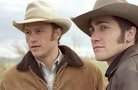

It is one thing to walk around all day after you’ve had sex the night before when you weren’t expecting to. It is a whole other thing when you’ve had that sex with someone of the same sex when you didn’t think that was who you were. And it is yet another thing entirely when that someone is someone you care about. This turmoil can be read all over the face of Ennis, played with a fierce stoicism by Ledger whose silence screams how deeply he internalizes his confusion. Jack on the other hand, will not say how much he loves Ennis but will sing loud and proud about his happiness. And though the two will reach an understanding that their lives are not complete without each other, the complicated nature of their relationship creates a direct contrast to the simplicity that surrounds them. Consequently, this complexity seeps into their regular every day lives, threatening everything they’ve worked for.

The women of BROKEBACK MOUNTAIN give varied perspectives on how it was to be married to Ennis & Jack throughout all those years. As Ennis’ wife, Alma, Michelle Williams, in a revelatory and eruptive performance, looks used and defeated as the years press on. She is introduced as boisterous and as a lover who might actually have a chance of getting into Ennis’ heart. In time, the obvious nature of Ennis’ relationship with Jack becomes as impossible to ignore as her disgust is to put into words. In drastic contrast, Jack’s marriage to Lureen (Anne Hathaway) is transactional. Neither feigns any love for the other and both are content with their arrangement. In fact, Jack has found a woman man enough to rationalize being married to a woman. Lureen’s lack of interest in her husband leaves Hathaway with a cold, distant performance while Williams’ performance is fueled by so many inner conflicts – love for her husband, hatred for his infidelity, disgust over his homosexuality, fear for her future and her children’s future – that she always looks unsettled, tense and desperate.

Outside world left outside, Lee’s love story is both tender and tragic. Gustavo Santaolalla’s somber acoustic guitar score carries you gently along for the journey as it exposes all the trappings life has to offer. Ennis himself says it best when he says, “If you can’t fix it, you gotta stand it.” And this certainly applies to his career of unsteady work or loveless marriage. Jack knows better though. Jack knows that Ennis and him have what it takes to have the good life, that they’re love is the kind that everyone wishes they had. Theirs is a love is that helps you through your problems if you let it grow but it is also a love that brings you nothing but trouble if you keep it all boxed up.

BROKEBACK MOUNTAIN is an important film and one that I’ve been looking forward to all year. It is a film that transcends its homosexual imagery allowing for the communication of the basic elements of the story to reach the viewer, any viewer. I took a deep breath before watching in an attempt to remove some of my expectations but I’m glad to say that it was everything I had hoped for it to be. Lee has created a benchmark film about how love can take hold of any two people at any time. I cried three times before the credits ran and was barely able to speak after the lights came up. My big, tall cowboy hat is off to you, Mr. Lee.

Sunday, November 20, 2005

JARHEAD


Written by William Broyles Jr.
Directed by Sam Mendes

Something I like to do before writing a review is avoid writing it. Before sitting down to write this particular piece about Sam Mendes’ war epic, “Jarhead”, I made a quick stop at a local sandwich shop for a large club. Whilst waiting in line, I paused Kanye West’s “Jesus Walks” on my ipod to listen in on the conversation taking place between the young, male sandwich maker and his customer counterpart. The sandwich maker had just seen “Jarhead” the night before and he was very vexed by the experience. You see, he had spent his hard earned sandwich making money on this war flick after not having seen anything on the big screen for a very long time. Imagine his disappointment when he sat through an entire film about the gulf war, the first one, and didn’t get to see any war. I’m paraphrasing here, as I don’t make it a habit to write down everything I hear other people say but his complaint went something like, “You just watch these guys drift around in the dessert forever and nothing happens. Finally it seems like something’s going to happen, they’re gonna get to fight and then nothing. No one fires a single shot.” I snickered silently to myself. Hmmm, I wondered if the sandwich maker would eventually connect his frustration to the infinitely more frustrating experience it must have been to actually be a marine in the Gulf War marching aimlessly through the dessert and never getting to take the shot you’ve trained so thoroughly for or if he’d figure out that his frustration may very well have been the desired effect of the film to begin with. Then | got distracted and wondered if I wanted mayo or Dijon.

In many ways, “Jarhead” is not that different from other war films. There is a loud, foul drill sergeant at boot camp; there are strapping, young men horsing around for no reason in particular other than having pent up sexual energy; there are familiar character types like the unbalanced loose cannon and the quiet, uncomfortable farm boy. What does differentiate “Jarhead” from films it is quite clearly influenced by, like Stanley Kubrick’s “Full Metal Jacket”, is that these soldiers’ war never comes. There are no ultra-violent, intensely choreographed battle sequences in Sam Mendes’ take on the war movie. Instead the soldiers simulate warfare, play football, have drunken parties (thank you whoever you are who decided Jake Gyllenhaal should wear only a Santa Claus hat in this particular scene) and make themselves look useful and sound like appreciative, dedicated soldiers for the media cameras. By the time they’re told the war is on, you may find yourself also excited and anxious for their piece of the action. What they get is more walking through the dessert. What they came across made me nauseous enough to not want a large-scale attack scene anyway. I guess the sandwich maker has a larger bloodlust than I.


Not having the bloodbath to distract us or shatter our naïve impression of how violent war genuinely is leaves us with very little other than the characters themselves to focus on. Whereas Mendes suggestion that these expectations may in fact be what is actually naïve, none of his characters are developed further than boys who think they’re men and want to kill and get back to their girlfriends and wives. Even the central character, Anthony Swofford (played by Gyllenhaal and based on the author who wrote the book the screenplay is based upon) is only given about two minutes of quick flashbacks, giving us some incite into his family history and sex life but not enough to give him any clear storyline to carry the film forward and home. And though cinematographer Roger Deakins frames and lights everything in a beautiful yellow-orange haze and editor Walter Murch keeps the pacing steady as a marine’s march, the characters come off as a bunch of apes in a cage. That may have been what Mendes intended but it isn’t always compelling or engaging. We are detached but so are they.

By testing our patience, Mendes leaves us frustrated and wanting some much-needed release. In addition, he points out that the very disturbing need to kill these men exhibit is inherent in you, me and sandwich makers everywhere. Did you know that was there?

Thursday, October 20, 2005

PROOF


Written by David Auburn
Directed by John Madden

What are we trying to prove?
Who are we trying to impress?
Why am I always looking for answers?

“Proof” answers all three of these questions in its first thirty seconds as Catharine (Gwyneth Paltrow) stares blankly at the television, her 27th birthday having just begun. She flips through channel after meaningless channel, settles on nothing and turns to look directly into the camera. Her eyes staring directly at me say, “Nothing, no one and it doesn’t matter.” Of course she’s disastrously unhappy but when did that stop anyone from pretending like they knew all the answers? Oops, I asked another question.

When the sun rises, she will celebrate both her birthday and the burial of her father (played by Anthony Hopkins), a mathematical genius who drastically changed his field three times before losing his mind. Before the day is out, her sister (Hope Davis) will fly in almost solely to push her further into her hole and she will take a chance on life by allowing a young man (Jake Gyllenhaal) to hold her through all of the crazy mess. The events of the day will give her the courage to share her own mathematical findings, her own proof. Now she’s really got something to prove because it isn’t clear she’s the proof’s genuine author.

A mathematical proof, one that checks out, shows that there is order in the world, that there are definitive answers. If Catharine wrote it, than she’s got plenty to prove. And whom does she need to prove this to? Her sister who spends all of her time completing mundane tasks from her meticulous “to-do” list to show that she is functional, structured, successful? Her boyfriend who’s got to get Catharine’s proof checked by the guys at the math department because he obviously doesn’t believe that girls can do math? To her father who was thrilled his daughter’s interests followed his own but only really wanted her to work along side him? And what of herself? If she proves that she wrote this proof, that she has the talent, the ability, the genius that may very well surpass her father’s, how long will it be until she begins to lose her mind? Does she want to know the answer to that last question?

Catharine ponders aloud that sometimes everything makes sense in her head and other times, it all seems crazy. Perhaps we don’t always need proof to say which of these realities is the true reality. Perhaps a little blind faith would do us some good.