Sunday, November 26, 2006

FOR YOUR CONSIDERATION


Written by Eugene Levy and Christopher Guest
Directed by Christopher Guest

It starts around September and goes right through until January when the nominations are announced. Hollywood slowly unveils their most thought-provoking, most dramatic, most controversial films. Some launch in hundreds of theatres throughout North America; others launch in just dozens. Every facet of the way the film is marketed needs to be just right. The stars need to make the talk-show rounds while the critical circles lay claim to their yearly favorites. You don’t want to be oversold and disappoint nor do you want to go unnoticed. What you want is your name called at that ungodly hour. When it is, you will no longer be introduced by your name alone. From now on, your name will always be preceded by Academy Award Nominee. The moniker will open doors for you, get you better scripts with better directors and better paychecks. If you’re none too careful though, it could also get you an overinflated ego that could cause major rifts on set. The doors that open lead to bigger rooms which means bigger possibility for public humiliation when you start to think you’re so much better than you actually are. All of this also means huge potential for laughs and jabs should the entire process of an actor’s performance on it’s way to an Oscar nomination be parodied, especially if it is to be parodied by writers, Christopher Guest and Eugene Levy, of BEST IN SHOW and WAITING FOR GUFFMAN fame. Huge potential can go either way though and sadly for Guest, Levy and the rest of the gang, their latest, FOR YOUR CONSIDERATION, a movie about a movie that starts to generate Oscar buzz, does not live up to its own awards season hype.

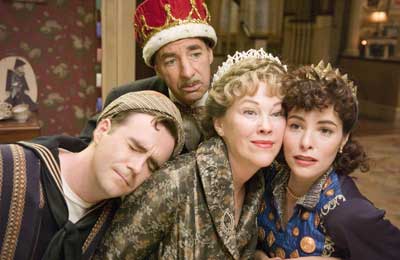
As the cast of characters is introduced and the scene is set, promise is shown. Guest himself plays Jay Berman, the director of the small Hollywood production, “Home for Purim.” The film stars veteran film actress, Marilyn Hack (Catherine O’Hara), as a mother nearing her death whose family has come home for the Jewish holiday. Joining Hack in front of the camera are Dad (Harry Shearer), son (Christoper Moynihan), daughter (Parker Posey) and her (scandal!) girlfriend (Mary Pat Hooligan). Other Guest regulars like John Michael Higgins as a neurotic PR guy and Jennifer Coolidge as a vapid producer fill out the space behind the camera. Bob Balaban and Michael McKean play the possessive writing team while Fred Willard and Jane Lynch play entertainment show hosts with permanent smiles hiding their empty souls. The size of the cast stretches so far that when Marilyn learns that an internet site believes her performance to be Oscar worthy, the reaction ripples further than it should. There is no time to develop anyone past the quirkiness that exemplifies most Guest character creations. With a running time of under an hour and half, clearly the time could have been taken. O’Hara’s Hack does receive more focus than any other but even her storyline seems to be missing an enormous chunk as her progression goes from intriguing to perplexing. The Oscar buzz leads to more attention and more focus on the cast and then suddenly, the film ends. I felt as though nothing had happened when so much should have.
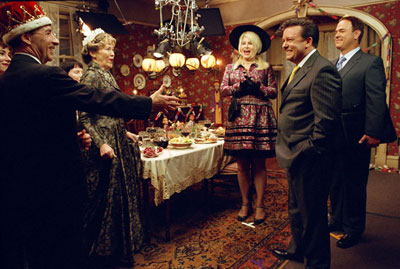

While the film does not satisfy on the surface, it does make a strong statement on the ridiculousness of the awards season. Now I’m an Oscar enthusiast but even I can acknowledge how silly the whole thing is. The title, FOR YOUR CONSIDERATION, comes from a common practice for production companies to take out full page ads in Variety asking Academy voters to consider a particular performance when they are making their picks. In the context of Guest’s film, it seems to be asking voters to consider something else entirely, like how out of control this process has become. Recognizing certain performances over others negates the craft itself and creates a hierarchy of status amidst the acting community. As if actors didn’t doubt their abilities enough to begin with, the need for an Oscar to validate your career choice forces talent to become second to recognition. Guest’s inclusion of the entertainment show or film critics and fair-weather executive producers only further criticizes all the hands that manipulate the machine. No role in Hollywood goes untouched by Guest; they all get swept up in the false reality of the pinnacle of success known as the Academy Awards.

Ironically, Catherine O’Hara’s performance in FOR YOUR COSIDERATION has begun to generate some Oscar buzz of its own (which I just contributed to). But anyone who knows a thing or two about what gets a name onto an Oscar ballot knows that no matter how good a performance is (and this one is pretty darn good but not that good), if said performance is better than the film it comes from, the walk to the podium gets that much longer. Christopher Guest better make sure he books ad space in Variety early.

Sunday, November 19, 2006

FAST FOOD NATION


Written by Eric Schlosser & Richard Linklater
Directed by Richard Linklater

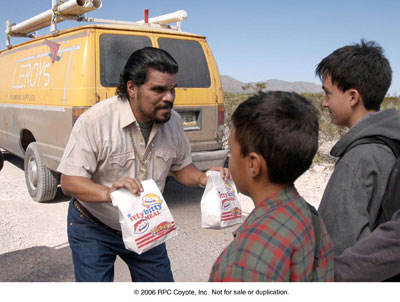
I’ve tried on a number of occasions to eliminate McDonald’s from my diet. The first time I tried was a few years back, after reading Eric Schlosser’s non-fiction work, FAST FOOD NATION. I remember going to buy fries for the last time before reading the chapter entitled, “Why the Fries Taste so Good.” I had to go for that last fry before I could never look at them the same way again. I went for months without a Big Mac or a Quarter Pounder with cheese but it didn’t last. Eventually I succumbed to my cravings that persisted despite the time that had elapsed. I knew what I was doing was wrong but as I bit into my two all-beef patties, special sauce, lettuce, cheese, pickles and onions on a sesame seed bun, I conveniently forgot about all the chemicals in the meat, the subliminal advertising geared towards toddlers and the migrant, illegal workers in dangerous meat rendering factories that made my burger possible. No sooner had I had my last bite did my stomach twist into a tangled mess. The pain was both horrible and familiar. Unfortunately, Richard Linklater’s narrative interpretation of Schlosser’s novel is nowhere near as nauseating or as a big a turn-off as the feeling of a Big Mac sitting at the bottom of your stomach.

The decision to translate FAST FOOD NATION from a non-fiction work of in-depth investigative journalism into a narrative film is a bold one. I was apprehensive at first but Schlosser’s involvement co-writing the screenplay with Linklater made me less so. Shaping facts into a story certainly humanizes the global implications of the fast food industry but if the narrative is not compelling then there isn’t much of a point. FAST FOOD NATION tells different stories to show the wide reach of how many are affected by the fast food industry. Greg Kinnear plays Don Anderson, an advertising executive responsible for The Big One, the latest burger success at Mickey’s, the fictional fast food chain at the center of the film. Don must investigate reports that there are significant traces of cow manure in the meat (Fun!). Ashley Johnson plays Amber, a teenage Mickey’s employee who juggles school and work while she begins to see her role in the corporate machine that is waiting in her future. Wilmer Valderrama and Catalina Sandino Moreno play Raul and Sylvia, two Mexican illegal immigrants who have been brought into the United States specifically to work at the rendering plant that manufactures the millions of patties that become The Big One. Very little is revealed about the characters themselves as they are merely symbols for the bigger picture. Consequently, there is very little identification with the film. A film that is trying to tell everyone, “America … this is what you’ve become,” needs the audience to feel like this is their America.


What FAST FOOD NATION best exemplifies is America’s complacency with the progression of its society. The problems don’t stop at Mickey’s. The fast food industry is merely just one faceless industry that is driving the American people into hopeless futures. Kinnear’s Don is a prime example. He has spent his life packaging products, feeding them to people the way they like it. All the while, he has also been feeding his convenient lies to himself as well. A successful burger comes at a cost and as he travels from his board room to the assembly line and begins speaking with people who don’t have any stake in the production of The Big One, he understands that there are truths under his lies that he cannot go on ignoring. By the time we see him bite into his third burger, his apprehension to do so is rampant. Yet, he still takes that bite. This is what we do. We get fed a ton of information from different angles. The product pushers tell us how wonderful it is and the non-believers prove otherwise. Schlosser’s book, which clearly details all the subtle atrocities the fast food industry unleashes into the fabric of America to make one more dollar at the expense of its loyal customers, is well researched and fact-checked. The flip side to the convenience of fast food, from obesity to the exploitation of underage employees, is being discussed by too many people and with increasing validity to be ignored. Yet millions still take that bite.

Linklater does not shy away from expressing his disappointment in the American people nor does he mince words about his lack of optimism relating to making change on the subject. Each character’s story is brought to a close and none of them are any better for any of their efforts. Some end up exactly where they wanted not to. Some end up continuing to support the industry despite their newfound knowledge. All these choices are made to ensure money is still coming in, to ensure the American dream is still within reach. Even the youth of tomorrow fail at their attempts to affect the future. The attempt itself does show a trace of Linklater’s hope, albeit it fleeting. Despite all this, Linkalter still wants to do his part. The last ten minutes of FAST FOOD NATION bring about some of the more gruesome footage found in the film. We finally get a tour of the “kill floor” at the rendering plant, with plenty of blood and eaad cow to go around. The nausea comes too late in FAST FOOD NATION but you certainly won’t be rushing for another burger any time soon.

Friday, November 17, 2006

LITTLE CHILDREN


Written by Todd Field and Tom Perrotta
Directed by Todd Field

Writer and director, Todd Field has a special talent. He has a knack for making his audience squirm in their seats while their stomachs turn. He is not a master horror filmmaker but rather a minimal dramatist with a keen understanding of the peculiarities of human behaviour. I left his latest film, LITTLE CHILDREN, feeling like I might throw up, just as I had when I left his first and last film, IN THE BEDROOM. Only this time, I left with more than just feeling that I had been emotionally hollowed; this time I left feeling puzzled. At this point, I would ordinarily explain briefly what LITTLE CHILDREN was about but that is a task I cannot do briefly. Put simply, without grasping any of its scope at all, LITTLE CHILDREN is another slice of life picture about the banalities of suburban existence. The mommies meet in the park on a daily basis and ogle the one single dad amongst them as their kids run amuck. Husbands turn to internet pornography or other women to get the fixes they stopped getting from their wives before sitting down to dinner with them. And this particular neighborhood welcomes back a former resident, fresh from his stint in jail for exposing himself to a minor, by plastering every post on the street with signs that ask, “Are your children safe?” Field’s timely reveal of the story elements and skillfully vigorous visuals draw you in to the raw unraveling of his characters, gracefully played by Kate Winslet, Patrick Wilson and Jennifer Connelly. LITTLE CHILDREN is fascinating and compelling without having any clear reason why it is either of these things. You may ask yourself where this is all going when you watch but you won’t care to know the answer.

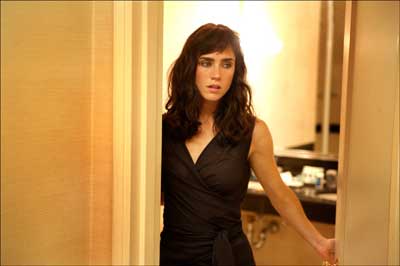
Life gets stale when you aren’t paying attention or even when you’re just trying to master the juggling act. Life is also very good at throwing another ball into the mess when you’ve just gotten the hang of juggling three. On one day, in the park and on a dare, Sarah Pierce (Winslet) introduces herself to Brad Adamson (Wilson). She has wagered five dollars with the other mommies that she can get Brad’s phone number. Both Brad and Sarah are married but that doesn’t factor into this game. At least it doesn’t until the bet somehow goes too far and the two kiss. They catch themselves and each other completely off guard. Sarah is married to a man she doesn’t love and has a three-year-old daughter for whom she has more distaste than love for. Brad has not been able to pass the bar exam since finishing law school and spends his evenings away from his wife (Connelly) watching teenagers skateboard when he’s supposed to be studying. Their kiss is meant to taunt the other mommies but instead it cracks their worlds open to reveal new possibilities. It isn’t long before they meet again and it isn’t long after that until they end up naked in Sarah’s laundry room. Given what an inattentive sap her husband is, it is a joy to watch Sarah send Brad signals, showing off her new bathing suit at the public pool or asking Brad to rub lotion on her back. It is also exciting to watch Brad reluctantly respond to these signals. He has a stunning and brilliant woman in his life and yet he navigates towards Sarah. It isn’t love that is growing between them but an energy that affirms to each that they are in fact alive.


LITTLE CHILDREN’s secondary plot is also brilliantly executed but adds a level of depth to a film that was already dug pretty deep to start with. When Ronnie (Jackie Earle Haley) moves back in with his mother (Phyllis Somerville), there is outrage amongst the residents of this suburb at the “pervert’s” arrival. Whereas Ronnie’s return defines the period in which Sarah and Brad’s affair takes place, it also makes the film seem as if it were trying to tackle more than it should have. The abuse Ronnie endures from some of the locals encourages sympathy for him but he is not reformed. Tying both plots together seamlessly, Ronnie violates his parole and, with flippers and snorkel in place, crashes the public pool in the middle of a heat wave, while Sarah and Brad flirt carefully in the shade. Ronnie lusts for all the tiny legs treading in the water until he is discovered. Amidst hysteria, all the children exit the pool into the arms of their parents and they all stare horrifically as authorities escort him out. What happens next is the perfect example of the dark humour that runs throughout LITTLE CHILDREN. Panic turns back into play in a split second as all the children jump back into the pool and the parents resume their previous conversations. Is Ronnie’s presence in the neighborhood truly causing anyone to lose sleep or is it just the drama that they all love? Crave? Need?

It was only after I left the theatre that I was able to reel in all my thoughts on LITTLE CHILDREN. A conversation in a yellow cab led me to see that the key lies in the title. As Sarah runs from the responsibility of having a daughter, as Brad plays football with his buddies when he should be studying, as Sarah’s husband surfs for porn while he’s at work, as Brad’s wife purposefully drops her spoon on the floor so she can look under the table to catch her husband playing with Sarah’s feet, it becomes clear that every one of these adults is doing the exact same thing; they are all acting like little children.

STRANGER THAN FICTION


Written by Zach Helm
Directed by Mark Forster

“Life is stranger than fiction,” or so the saying goes. Borrowing from the expression, Mark Forster’s STRANGER THAN FICTION is about one man’s life that has become the subject of soon-to-be published fiction. An as yet undetermined narrator announces at the very start that, “This is a story about a man named Harold Crick.” That narrator is revealed to be author Karen Eiffel (the always absorbing Emma Thompson), whose previous novels have all ended with her protagonists dying to serve the story’s greater purpose. Somehow, her voice has found its way from the pages that tell Harold’s story to the head of a man actually named Harold Crick (Will Ferrell). As she pushes through the novel that has taken her a decade to complete, Harold begins to hear her voice wherever he goes. As she points out his obsessive-compulsive behaviour, he begins to question the strict structure that has kept his life in order for years. When Eiffel announces that he is unknowingly spiraling towards his imminent death, he has heard enough. The funny thing is Harold’s death was imminent before someone told him it was. He just needed someone to remind him that he should probably get around to doing some living while he was still alive.

But is this actually a story about Harold Crick? Is it not just as much a story about Karen Eiffel? After all, she knows the story she is telling so well that her words and voice have torn some line in the fabric of the universe to make it into Harold’s head. I don’t know how likely that is in real life but I’m pretty sure it would never happen if there weren’t an intense cerebral connection between the two parties involved or if he weren’t a complete fabrication of one’s imagination. At first glance, Crick and Eiffel seem like people on entirely opposite ends of the spectrum. After a closer look, they are clearly in opposition to each other but they inhabit the very same spectrum. Both are shown as obsessive-compulsive people. Harold counts his brush strokes and goes to bed at exactly the same time each night. Karen lives a reclusive life in a starkly white apartment, extinguishing her cigarettes in spit-damp tissues she tucks away in her pockets. Both attempt to exert high levels of restraint in their lives to maintain the illusion that they command the direction their lives will take, one through chaos and the other through control. It is also a convenient way to avoid experiencing anything frighteningly unknown.


Eiffel struggles with how to kill Crick for most of the film. How do you kill someone to make a literary point when their life barely has any relevance to begin with? Meanwhile, Harold’s recent bout with schizophrenia has him seeing how the tiniest changes in his life can make it all the more exciting. Funny how the knowledge that death may be around the corner acts as a good kick in the ass. The connection between Crick and Eiffel also exposes their attitudes towards life and death while helping each of them heal their apprehensions towards both realities. Crick had conveniently eliminated the possibility of death from his calculated existence. Eiffel’s eerie fascination with death had stopped her from seeing her own possibilities for happiness in life. As the two become more aware of the other’s existence, and subsequently more comfortable with that, they each begin to see what they were not seeing prior. Life will not be and will never seem worth living if you don’t take risks, no matter how small they may be; from wearing a sweater instead of a tie for a change to stepping outside your apartment and meeting new people.

STRANGER THAN FICTION is smart without being superior, funny without being asinine. Forster’s previous work has either bored me (MONSTER’S BALL), frustrated me (STAY) or filled my heart with warmth and my eyes with tears (FINDING NEVERLAND). Here he creates a poignant piece about a woman telling the story of a man because its easier than telling her own story. Her real problem with killing Harold Crick is that she no longer knows if she wants to. Killing Harold would just mean metaphorically killing herself again. Writing Harold’s newfound appreciation for life has sparked her own and Forster hopes her reminder will be one to us as well. Not to sound too morbid but our deaths are as imminent as Harold’s. The film’s subtle layers expose a simple insight about the distance between our lives and the stories we tell about our lives. These stories are told to create meaning and give shape but we all run the risk of missing out in the process if we don’t allow for the unexpected.

Sunday, November 5, 2006

BABEL


Written by Guillermo Arriaga
Directed by Alejandro Gonzalez Inarritu

Mexican director Alejandro Gonzalez Inarritu has a point to make with his second Hollywood offering, BABEL. He wants us to see how we don’t listen to each other and to what extent that is making all of our lives more difficult. To do this, he tells four different stories where characters find themselves in situations where they are not understood despite all their efforts to be. These stories stretch across the globe, from Tokyo to Mexico and center around an incident in Morocco that sparks an international scandal. Inarritu treats his imagery like poetry and has created a stunning picture with pacing that ranges from peacefully prophetic to tensely wrenching. But despite its unmitigated design, there is a larger irony undermining BABEL. It is a film concerned with the struggles faced when trying to get your point across that also wants to show how our lives are all connected yet its four storylines stretch to connect to each other and the point gets somewhat lost in that process.

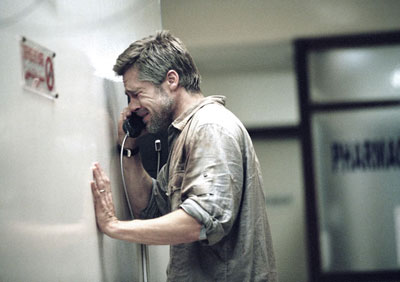
Brad Pitt and Cate Blanchett play Richard and Susan, an American married couple on a sour vacation in Morocco. Their youngest child has just died of natural causes and they have come to try to forget. Instead, the guilt and anger they could not express at home has only become more prominent in their isolation. A stray bullet hits Susan in the shoulder while she glares out her tour bus window and her vacation goes from bad to potentially tragic. The unfolding of this scenario best exemplifies Inarritu’s views on the frustration that often goes alongside communication. A desperately frightened Richard must get his wife medical attention in a town without a hospital and where no one speaks his language. He finds one tour guide who carries him through the experience, facilitating his translation. Speech is not his only barrier as this small Moroccan village’s medical treatment is far from what Richard is accustomed to in his privileged life at home in California. He then runs into trouble where one would not expect him to. He is unable to convey the seriousness of his wife’s condition to the remaining tour bus passengers, most of them American. He requires their support but they don’t listen to a word he says, focusing solely on their own needs, some selfish and some reasonable. As Richard is rightfully focused on his wife’s needs, he isn’t listening to them either and arguments ensue. Richard’s communicative difficulties also extend to one other person, Susan. Writer Guillermo Arriaga brings us to the most intimate frustration with understanding here when these two people require a brush with death to get them to be quiet enough to hear how afraid each other is and how responsible each feels for the death of their child.


The remaining plots branch out from this incident but whereas the execution of the plights is poignantly told, the connections themselves are weak or vice versa. Richard and Susan’s children run into trouble of their own when their Mexican Nanny, Amelia (Adriana Barraza) takes them over the border so that she can attend her son’s wedding. When reentering the United States, the border patrol are suspicious and begin asking many questions. Amelia does not have difficulties speaking English but does not answer their questions as well as she should. The film loses some focus here, as the patrollers’ approaches are more racist in nature than anything else. Whereas racism is certainly another form of fear and misunderstanding, this dire situation feels easily unavoidable and contrived to serve the film’s purpose. Meanwhile, in Tokyo, a deaf and mute teenage girl deals with the loss of her mother and fights to be heard when she can’t make any noise. Cheiko is played by Rinko Kikuchi; it is a vibrant and commanding performance. She herself cannot hear what others are trying to say and is limited in how she can communicate her own feelings and desires. Her struggle is only intensified by her lack of physical connection to other people, as she is an aggravated virgin. All of her attempts to entice are thwarted by her silent aggression and her incapacity to get anyone to hear her is heartbreaking. In many ways, her storyline is the most effective but it is only tied to the whole of the film because her father’s rifle was used in Susan’s shooting in Morocco.

The word “babel” finds its roots in an association to the Hebrew verb “balal,” which means to confuse or confound. Hence, when someone is said to be babbling, they are not communicating their point properly, just spewing out a bunch of unnecessary words that end up being entirely pointless. All of Inarritu’s words and images are carefully chosen and constructed in a concise fashion that is on many levels successful, but by trying to get across so much, he ends up narrowly but sadly missing his own point.

Sunday, October 29, 2006

RUNNING WITH SCISSORS


Written and Directed by Ryan Murphy

In 2002, author Augusten Burroughs published his memoir, entitled RUNNING WITH SCISSORS. It went on to find success and praise, as well as skepticism regarding its authenticity. The book chronicles Augusten’s formative years where he was sent to live with his mother’s psychiatrist and his family (the Finches) while she dealt with her manic depression. The book has a dry humour that refuses pity for Augusten’s numerous woes. Reading it brings about many laughs but at no point in time does it come across as a factual retelling of events. One almost needs to distrust the author to find his humour. To ponder Augusten’s perils as if they were plausible would plunge any heart into deep pain. So we laugh instead. That is after all what Augusten’s style incites. What is lacking in the book finds even less presence in the film. Purpose. You can tell your own story and you can embellish it all you like but if your journey doesn’t lend any meaning to my own then it becomes more useful in serving your own ego than enriching mine. Writer/Director Ryan Murphy’s translation segments Augusten’s book into a visual compilation of his favorite literary moments that lead nowhere and reveal very little about the man behind the memoir.

Bearing Burroughs’ weight is actor Joseph Cross. Cross plays Burroughs with a near-permanent face of silent awe throughout. He cannot comprehend how his life took such a bizarre turn. His youthful grin hints to his strong character while his conscientious eyes confirm his understanding that the path he has been forced upon will not lead to a fulfilling life. Augusten must bounce back and forth between his mother’s (Annette Bening) home and the Finch’s, where he is further bounced around from one psychological mess to another. Whether Augusten is sitting in the Finch parlor with feeble, subservient mother, Agnes (Jill Clayburgh) while she nibbles at dog kibble or passively accepting older daughter Hope’s (Gwyneth Paltrow) abuse towards her cat or hovering over a toilet bowl to observe the sign from God that has come in the form of Dr. Finch’s (Brian Cox) stool, he always looks lost. Going home doesn’t help either as what waits for him there is often just as outlandish but more so scarring as his mother’s psychoses could one day kill her or one day be his. As lost as he gets, at times joining in the mentally unstable fun, he never lets go entirely of the railing that has helped him maintain his balance all the while. Respectful but problematic as someone in his position needs to become mostly unrecognizable in order to find himself again, Augusten’s lines of sanity are much more blurred in print then on screen as Murphy does not construct any build in character, shuffling Cross around repeatedly as though his life took place in a pinball machine.


RUNNING WITH SCISSORS is both a dream and a nightmare for actors. It all depends on who you are and whom you’re playing. Bening and Cross get the most screen time by far. The rest of the cast drift in and out of the narrative, giving each of them very little time to make their mark. It also doesn’t help matters that everyone is playing a character with some degree of mental defect. As a result, Paltrow and Joseph Fiennes (as Augusten’s thirty something year old lover, Bookman) overact their characters into caricature. More veteraned actors like Clayburgh and Alec Baldwin (as Augustan’s father) have very little screen time but manage to subtly give humanity to their madness, making some of the most evident impacts on Augusten. Of course, Augusten is overshadowed by Bening as Deirdre. His mother needed to be the focus whenever she was in the room so it is only fitting that Augusten struggle for attention in a movie about himself. Thankfully, Bening delivers a performance that is as layered as her character is medicated, justifying the spotlight and delighting her audiences yet again.

The chemistry between the ensemble and a sundry soundtrack make RUNNING WITH SCISSORS reasonably enjoyable but it does not bring you anywhere near Augusten’s heart. A new hair style and a fashionable scarf are not character development. RUNNING WITH SCISSORS may amuse in its audacity but despite surrounding Augusten with psychologically damaging absurdities every step of the way, it fails to show any real insight into what made Augusten the man he became.

Saturday, October 28, 2006

SHORTBUS


Written and Directed by John Cameron Mitchell

I can’t speak for all the ladies out there but there comes a point in every boy’s life when he discovers he has a penis and how good it feels to lavish said penis with much attention. Sadly, the realization that there is more to life than satisfying your penis’ urges does not subsequently occur for every boy. In the opening scene of John Cameron Mitchell’s provocative new film, SHORTBUS, James (Paul Dawson) sits immersed in his bathtub. He has a video camera in hand and it is not long before he turns his focus to his flaccid member. What follows is a pulsating montage that introduces most of the film’s other players and sets the tone, announcing in a barrage of eruptions exactly what to expect. Broken up by sweeping spurts of an animated New York City (strikingly animated by John Bair), James bends over backwards for some good old fashioned auto-fellatio until his boyfriend, Jamie (PJ DeBoy), comes home; sex therapist, Sofia (Sook-Yin Lee) gets busy with her husband (Raphael Barker) all over their apartment before she fakes an orgasm rather convincingly; and dominatrix/prostitute, Severin (Lindsay Beamish), whips her latest John while he asks her views on world events and adds his own, uh, personal squiggles to the Jackson Pollock above his bed. There is no use hiding the sex in a movie about sex and you know instantly whether this is a movie for you or not. Sex controls these people’s lives. It motivates their decisions, stands in the way of their happiness and, for a little while, their frustrations become mirrors unto our own sexuality.

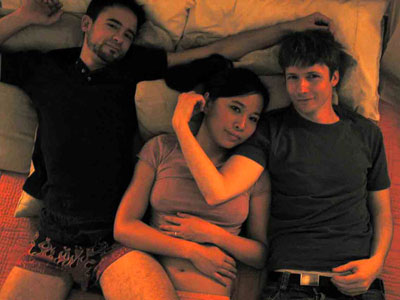
John Cameron Mitchell is a man who clearly thinks about sex very often. That being said, he clearly doesn’t just think about it with the head between his legs but the one on top of his shoulders as well. His previous feature film, HEDWIG AND THE ANGRY INCH (which he also wrote and starred in), smashed walls surrounding gender identification and forced people to see the person and not just the genitalia. With SHORTBUS, Mitchell dives deeper into desire and sexual identity. Characters like lovers, James and Jamie, want to open up their relationship and talk themselves through it to make sure they survive the transition. When they let a third man in on their fun, they blur the lines between love and sex. Like many others, they want to push themselves towards the exploration of their desires but they also ignore the emotional ramifications of being so open-minded. Meanwhile, Severin’s persona is hyper-sexualized to the point of being one-dimensional. She makes sure she comes across as a powerful sexual being but owning one’s sexuality outright means running the risk of having that become the dominant facet of your identity or, as in Severin’s case, it becomes a convenient rock to hide behind. In one of the film’s more touching plot lines, Severin’s rebellion pushes her so far from herself that she can no longer even say her real name out loud.


Serving as the opposing repression to Severin’s expression is the relationship between Sofia and Rob. Given her role as a couples’ therapist, the twosome strive for complete openness but what they maintain hidden are their deepest sexual desires and issues. In one of the film’s more brilliant moments of subtlety, Sofia, locked in her bathroom, is determined to give herself an orgasm, something she has never been able to do by herself or with the aid of someone else. The progression is coming along smoothly until Rob’s music blaring from the living room takes her out of the moment. The funny thing is that his music is purposefully that loud so that Sofia can’t hear him masturbating. When she storms in on him, he hurries to close his laptop so that she doesn’t see the sadomasochistic porn he’s watching. Whereas they seemed earlier to have a very healthy sex life together, it is revealed here that their connection only goes so far. Sofia does not know of Rob’s S&M interests and he doesn’t know she’s never been able to climax. As a result, neither is being fully honest with themselves or with each other causing their hang-ups to transition into actual marital problems.

SHORTBUS is not without its shortcomings. Hiring actors who are willing to do almost anything on camera means potentially not hiring the best people for the roles. While Lee and Beamish exhibit both strength and vulnerability in their roles, creating a quiet intimacy between them, the Jamie’s are merely amateurish. Deboy is devoid of personality and Dawson is meant to be downtrodden but comes off more as passive. Their surface performances lend to the film’s inability to go to the depths it needs to. Given that the film is trying to delineate between the physical and emotional permeation of one’s body and soul, just scratching the surface is not enough. In that sense, SHORTBUS is like mediocre sex – it passes the time and it is enjoyable but it doesn’t make your body ache for more and everything you felt during is gone by the time you get out of the shower.

Sunday, October 22, 2006

MARIE ANTOINETTE


Written and Directed by Sofia Coppola

It is very quiet. Austrian Archduchess, Marie Antoinette (Kirsten Dunst), aged 15, has just been betrothed to Louis XVI (Jason Schwartzman), the future king on France. Throughout the long trip from Austria to France, there is an odd expression on everyone’s face. It’s as if the air itself is uncomfortable. As the French court awaits Marie Antoinette’s arrival, they putter around amidst the leaves and talk amongst themselves about nothing at all. They all seem to be thinking something to themselves. Judging from the same puzzled expressions on the moviegoers’ faces at the screening of Sofia Coppola’s MARIE ANTOINETTE I attended, I think they might be thinking how strange the entire scenario seems. Everything feels a little bit slow, a little too quiet and mostly out of place. It is too early to give up on the film at this point. After all, this is Coppola’s follow-up to the haunting, offbeat LOST IN TRANSLATION. We are in good hands. This uneasiness must be in step with what Marie Antoinette is going through. Once she finds her footing, I’m sure she will break out of her shell and show these French folk how to live freely and the film will follow. Well, Marie Antoinette, the person, gets the hang of it but sadly, MARIE ANTOINETTE, the movie, never does. It remains hollow and aimless, leaving me wondering how Coppola could have been happy with it.

Coppola took a decidedly different and brave approach to chronicling the woman who became the queen of France at
age 19. She cast American actors in French roles and did not have them speak French or even with an accent. She boosts the soundtrack with 80’s new wave music instead of music of the period. The choices are meant to highlight the lonely plight of Marie Antoinette, to show that her emotional journey is timeless. Only Dunst shows hardly any emotion in the title role so there is nothing to take away. She can handle isolated and she can party with the best of them but she doesn’t show any turmoil or inner-conflict. It doesn’t help that Coppola’s script features naturalistic dialogue either. People rattle on about nonsense and gossip but rarely ever say anything of note to each other. Perhaps this is what Coppola had intended to show but meaningless conversation needs to give insight into a character’s mind at the very least. Here, all the minds are empty.


If it weren’t for the fashion and the food (and the fortune that must have been spent on making everything look so lavish), there would be nothing at all to focus on. For such famous historical figures, very little actually seems to happen to them. For what seems like half the movie, the entire plot focuses on how Louis won’t have sex with Marie Antoinette. It is certainly a pressing matter as an heir has to be produced in order to validate their marriage. If it is not consummated, it may even be annulled. When the “great work” was finally done, Marie Antoinette is elated but there is no explanation as to why it was so difficult to begin with nor does it seem like it became any more frequent afterwards. Her brother had a chat with the future king and that supposedly did the trick. There is no mention as to what that chat was about so your guess is as good as mine as to what finally turned him on. Historically, Marie Antoinette became the scapegoat for France’s increasing deficit. Whereas the majority of France’s money had been sunk into the 7 Years’ War and aiding the Americans in their struggle for independence from England, the masses pointed their fingers at Marie Antoinette’s frivolous spending. She went from an adored queen to being chased from her palace. The build that led to that change must have been tumultuous but Coppola leaves history at the door while very little happens inside. By the time the mob shows up to drive her and the king out, it feels more like a device than a moment in time.

I can see why the French booed at Cannes. MARIE ANTOINETTE is a calculated project that was troubled since its conception (Coppola abandoned it during the script writing process to create LOST IN TRANSLATION because she wasn’t sure how to make it work). The deliberate disregard for historical accuracy may have been valiant to start but finished feeling labored. Coppola’s previous works relied on emotion more so than dialogue to get under the skin of the viewer. Their success announced great promise for MARIE ANTOINETTE but Coppola lost her edge somewhere amongst the hundreds of pairs of Minolo Blahniks custom made for the film. A lesser director would not have taken such an ambitious approach to this story. A lesser director would have made a film far worse than this one. May MARIE ANTOINETTE be but a misstep along the path of a brilliant career.

Saturday, October 21, 2006

THE QUEEN


Written by Peter Morgan
Directed by Stephen Frears

In August of 1997, Diana, the former Princess of Wales, was killed in a car accident. An international sense of grief overtook the modern world. She was charitable, a humanitarian, and a beautiful one at that. She was adored by millions for being flawed, for never rising above the level of the people or appearing entitled. She was modern royalty, a royalty that connected with the masses instead of one that looked down at its people from a pedestal. And while the families of the world grieved the loss of an icon with an outpouring of emotion, one family chose to keep the loss to themselves, a private family matter. That family was the Royal Family. Director Stephen Frears (MRS. HENDERSON PRESENTS) bravely crosses the gates of Buckingham Palace to show the millions who watched from outside what might have been going on inside during the week following Diana’s death in this intimate and delicate portrayal of THE QUEEN.

Frears shows both respect and restraint in his telling of this tale. No one character, including Diana, is over glorified, making all points of view and perspectives relevant and reasonable. For all his nobility, Frears’ directorial efforts are surpassed by a sensitive and balanced script by writer Peter Morgan (and by the delightfully enigmatic performance by Helen Mirren as The Queen, but more on that later). Morgan’s script came together from a collection of interviews and discreet contacts. The remaining details were filled in by his imagination. The result draws many lines, leaving opposing forces on each side of the gate. Two months prior to Diana’s death, Prime Minister Tony Blair (Michael Sheen) was elected to office with a landslide win. He represented the modern man and the people hoped his youth would bring England a desperate revolution. England though, will always be caught between the old and the new as long as the Monarchy exists. The Monarchy by nature cannot be modern. It is steeped in tradition, some that even the family laugh at. But though they may laugh at them, they are always upheld. What the Queen does not see coming is that her allegiance to tradition has brought her and her family so far removed from her people that they no longer understand them. As the Royal Family continued to say nothing regarding Diana’s death, the public pointed their anger for their loss directly at them, insinuating that they had no compassion, no hearts. But as much as the Queen did not consider their feelings, the people did not consider hers. Different people grieve in different fashions and Morgan’s script shows the Queen’s decision to not speak publicly about Diana’s death not as a cold decision, but one that placed her family first, especially her grandsons. The very public death was also a very private matter. The closed gate between both parties never allowed either to fully comprehend the other.


By now you have heard how good Mirren is as The Queen. Trust me, you will continue to hear this until the moment she walks up to the stage to accept her Oscar (or at the very least, a BAFTA). Mirren’s humane performance is often hilarious and always insightful. In one moment, she is sarcastically dismissing the newly elected Blair; in another she is lost but determined to understand, her eyes fixed on a television interview of Diana talking about the way the Royal Family treated her. From her side of the gate, she has given her entire life to her people; they will always love her for it and respect her decisions. Mirren’s eyes are always searching for understanding, while maintaining her dignity and exhibiting restraint. At first it seems she is searching to understand why the reaction to Diana’s death is so massive. To her, Diana had always been trouble and had brought so much shame upon her family. As her search continues though, she is striving to make sense of the disdain and contempt she feels growing in her people. It is not that she is no longer connected to them; it is just that she doesn’t see where they are coming from anymore. How could she? She knows a very different side of Diana’s story than they do. In one very simple yet overwhelming scene, The Queen gets her four-wheel drive vehicle stuck in a stream. She is alone, surrounded by nature and waiting for someone to come pick her up. In that moment, she is overtaken. She says nothing but her mind’s thoughts echo the daunting position she is in. The mother of her grandsons is dead; her people have turned on her; she is the bloody Queen of England and she is stuck in a stream! It is all too much and she bursts into tears. She is only human after all.

I must admit, I did not get swept up in the worldwide grief over Diana’s death. Of course, I saw the enormous size of it but I was just not taken in by it. Even with my detached position, it is impossible to avoid being taken in to it when watching THE QUEEN. It is also not possible to support but one side thanks to Frears and Morgan. Being placed on both sides only allows for the possibility of tapping in to both expressions of grief. The grief is only heightened by the inability for both sides to empathize with the other. There is no way to know for certain how the Royal Family actually grieved the death of Diana but when THE QUEEN impartially opens the gates that have since been closed, one might hope this telling is close to the truth, if only because this possible truth will certainly heal.

Saturday, October 14, 2006

THE DEPARTED


Written by William Monahan
Directed by Martin Scorcese

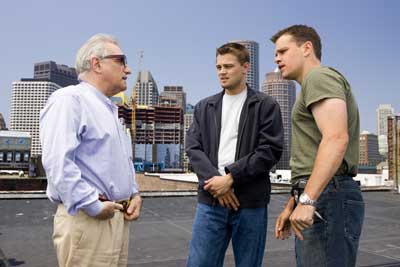
This is it, folks. It’s the one you’ve all been waiting for. It is a true return to form, style and relevance. It has been all too easy, almost expected, to laud Martin Scorcese pictures with praise in recent years. The man has talent and has crafted some of cinema’s landmark films, from TAXI DRIVER to GOODFELLAS. The industry was naming his last picture, THE AVIATOR, the film of the year. That seemed exaggerated, an all too safe a thing to say. To name the same of his previous epic mess, GANGS OF NEW YORK, was even more absurd. There seemed to be regret for not crowning him king earlier for more deserving efforts. The later pity praise felt apologetic instead of congratulatory. The films themselves felt manufactured for mass appeal, devoid of personal involvement and often a courting of industry acceptance. This time is different. This time Scorcese feels concise and calculated, like a man with a purpose, focus. This time Scorcese has left his hopes for accolades behind him and engineered his own cinematic rebirth. This time Scorcese says goodbye to his past and embraces THE DEPARTED.

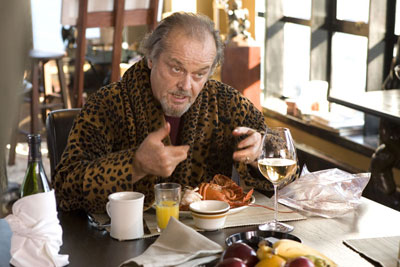
Borrowing its intricately woven story from the 2002 Japanese film, INFERNAL AFFAIRS, THE DEPARTED stars Leonardo Dicaprio and Matt Damon as moles infiltrating both sides of a war between the law and organized crime. Dicaprio plays Billy Costigan, a Boston State Policeman with a family history entrenched in crime. As he is trying to make a new name for his family, he is thrown back into the world he worked so hard to escape. Costigan will go undercover and make his way into the confidence of Boston’s biggest crime boss, Frank Costello (Jack Nicholson). Costello, meanwhile, has his own man on the inside of the Boston State Police, Colin Sullivan (Damon). Sullivan was brought under Costello’s wing when he was just a boy who was doing well in school. Both Costigan and Sullivan sought power. Costigan’s power lied in authority and changing his apparent destiny through hard work. Sullivan was seduced by a different kind of power. He still had to work hard but he had the muscle to back him up when he needed it. Dicaprio’s and Damon’s solid performances heighten the tension and make for insightful character studies. As Costigan, Dicaprio is anxious and unstable. Pretending to be a brute with nothing to live for and no reason to do bad other than it being his genetic makeup goes against everything he’s ever struggled with. His eyes flare up and his whole body flinches every time he is around intense violence; he never seems to get used to it. As Sullivan, Damon is a confident, cocky liar who gets off on how many people he’s fooling and just how well he is fooling them, from his colleagues on the force (a supporting cast consisting of Martin Sheen, Mark Wahlberg and Alec Baldwin) to his psychiatrist girlfriend, Madolyn (the relatively unknown and engaging Vera Farmiga). When it becomes apparent that both teams have been permeated, the game to catch the rat becomes tenser the closer each gets to figuring the other out. Amidst growing suspicion and fear of getting caught, THE DEPARTED becomes unpredictable and entrancing.


The surprisingly layered performance of Nicholson as Costello is one of THE DEPARTED’s best features. I expected that Nicholson could pull off a mob boss in his sleep but he brings experience and the effects of time to the role. Like one would expect, one doesn’t become a mob boss from being a nice guy. Costello is evil right through. He finds amusement in how a body slumps over to the side instead of forward when he blows a bullet through the back of her head. He has grown accustomed to getting everything he wants, to having no one stand in his way. To some extent though, he has grown bored and complacent with this lifestyle. He knows of nothing else but knows that alternatives exist. He seems to live his life appreciative of his position but with regret, or at least an awareness, that he did not make other decisions. When he speaks of Costigan’s father as a guy who could have been a big boss if he wanted to but didn’t, the acknowledgment alone highlights the power of choice. When he tells Costigan that he should go back to school, it highlights his own choices.

Something Costello is fond of saying is that “No one gives it to you; you have to take it.” It is a mantra for Costello and it seems like one for Scorcese as well regarding his approach to this film. Scorcese’s command of THE DEPARTED can be felt in the composition of each shot, in the energy of the omnipresent soundtrack and the grasp of the subject matter. Like Costello, Scorcese has been coasting in recent years; the results have been passable, at times solid, but always tired. THE DEPARTED announces Scorcese’s return to making affirmative choices again, and the right one’s at that.